Vienna Christmas markets are among the most enchanting in Europe — and they’re just the beginning of a year-round calendar of festivals, celebrations, and seasonal events that make Vienna special in every month. From the glittering lights and Glühwein of the Advent season to the open-air summer concerts at Schönbrunn, the waltzing glamour of the Opera Ball, and the joyful Easter markets in baroque squares, Vienna’s seasonal events add magical layers to an already extraordinary city. This comprehensive guide covers every major seasonal event, with exact dates, locations, insider tips, and practical advice to help you plan your visit around Vienna’s most memorable celebrations.
Vienna transforms with the seasons in ways that few cities can match. Winter wraps the baroque architecture in fairy lights and the scent of cinnamon and roasting chestnuts. Spring brings pastel-colored Easter markets and blooming palace gardens. Summer fills the Danube Island with free music festivals and Rathausplatz with open-air cinema. Autumn paints the Wachau vineyards gold and brings the new wine season. No matter when you visit, there’s something extraordinary happening.
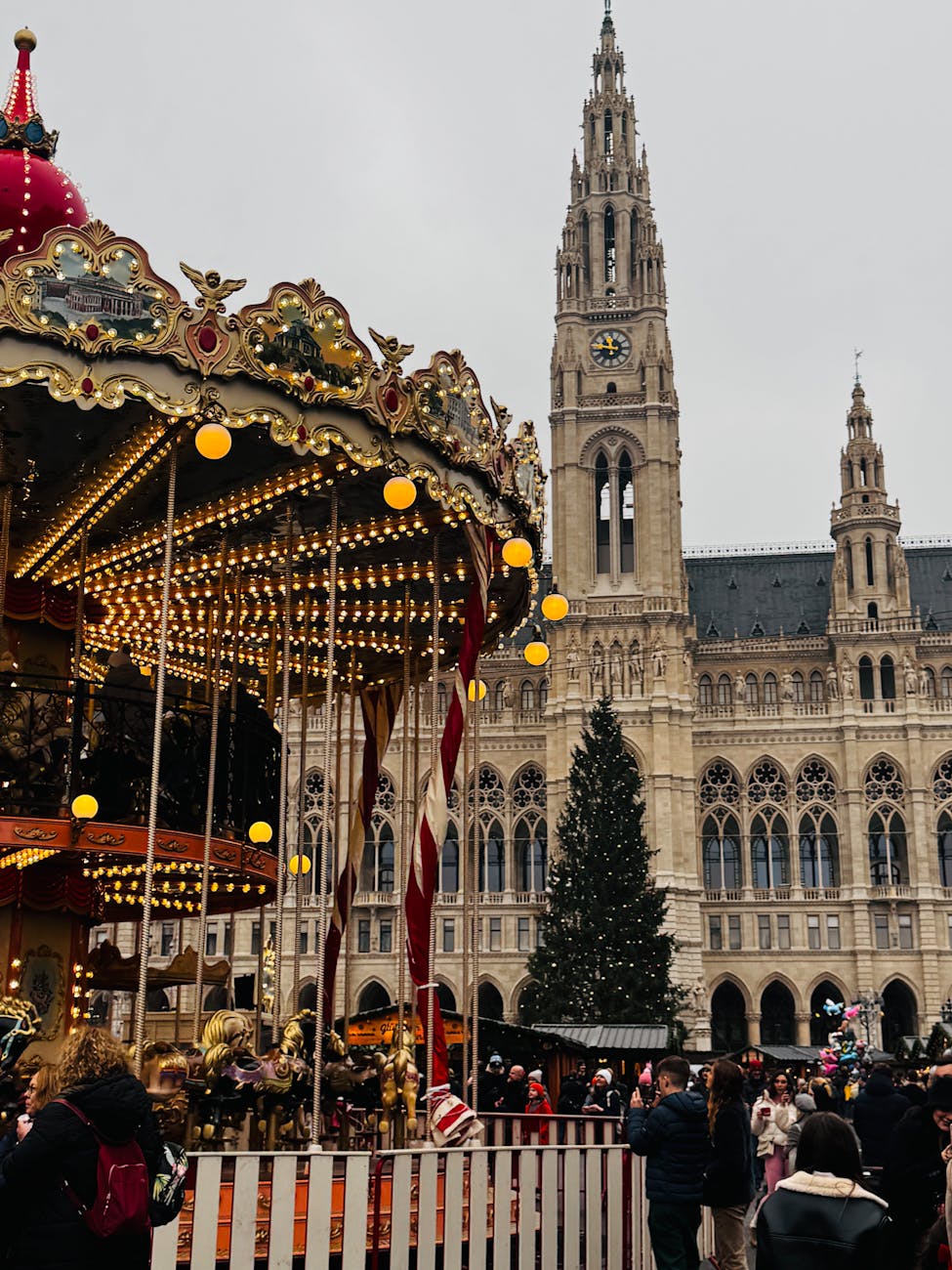
Vienna Christmas Markets: The Complete Guide
Vienna’s Christmas markets (Christkindlmärkte) are a centuries-old tradition, transforming the city’s most beautiful squares into twinkling wonderlands of handcrafted ornaments, warming drinks, and seasonal treats. The season typically runs from mid-November through late December, with some markets continuing into early January.
Rathausplatz Christkindlmarkt (Vienna’s Largest)
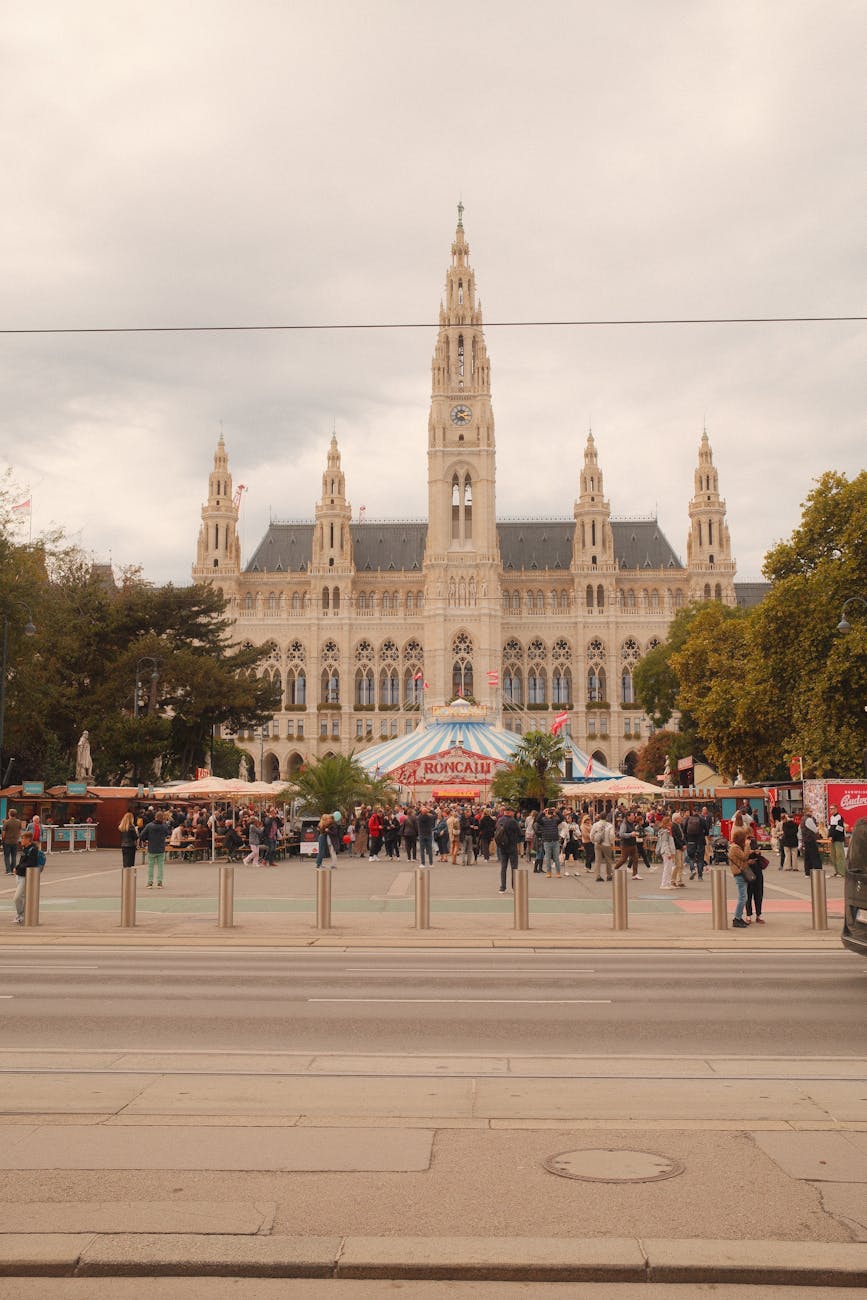
The market in front of the Rathaus (City Hall) is Vienna’s most famous and largest Christmas market, running from November 13 to December 26, 2026. Over 150 stalls line the illuminated park, selling everything from hand-blown glass ornaments and wooden toys to embroidered linens and ceramics. The towering Rathaus itself is bathed in festive lighting, and a magical tree-lined path leads through the heart of the market.
What to eat and drink: Glühwein (mulled wine) in collectible mugs (€5–€7 plus a €3–€4 mug deposit), Punsch (fruit punch with rum), Maroni (roasted chestnuts), Kartoffelpuffer (potato pancakes), and Lebkuchen (gingerbread). Tip: Visit on a weekday evening to avoid the weekend crowds, and arrive after 7 PM when the lighting is most magical.
Schönbrunn Palace Christmas Market
Set in the grand courtyard of Schönbrunn Palace, this market runs from November 6, 2026 to January 6, 2027, making it one of the earliest to open and latest to close. The palace facade provides a spectacular backdrop, and the market focuses on high-quality Austrian crafts — hand-carved nativity figures, beeswax candles, and artisan food products. A large Christmas tree dominates the center of the courtyard.
Tip: Combine your visit with the palace’s special Christmas concert series or the Christmas-themed palace tour. The market is less crowded than Rathausplatz and has a more refined atmosphere.
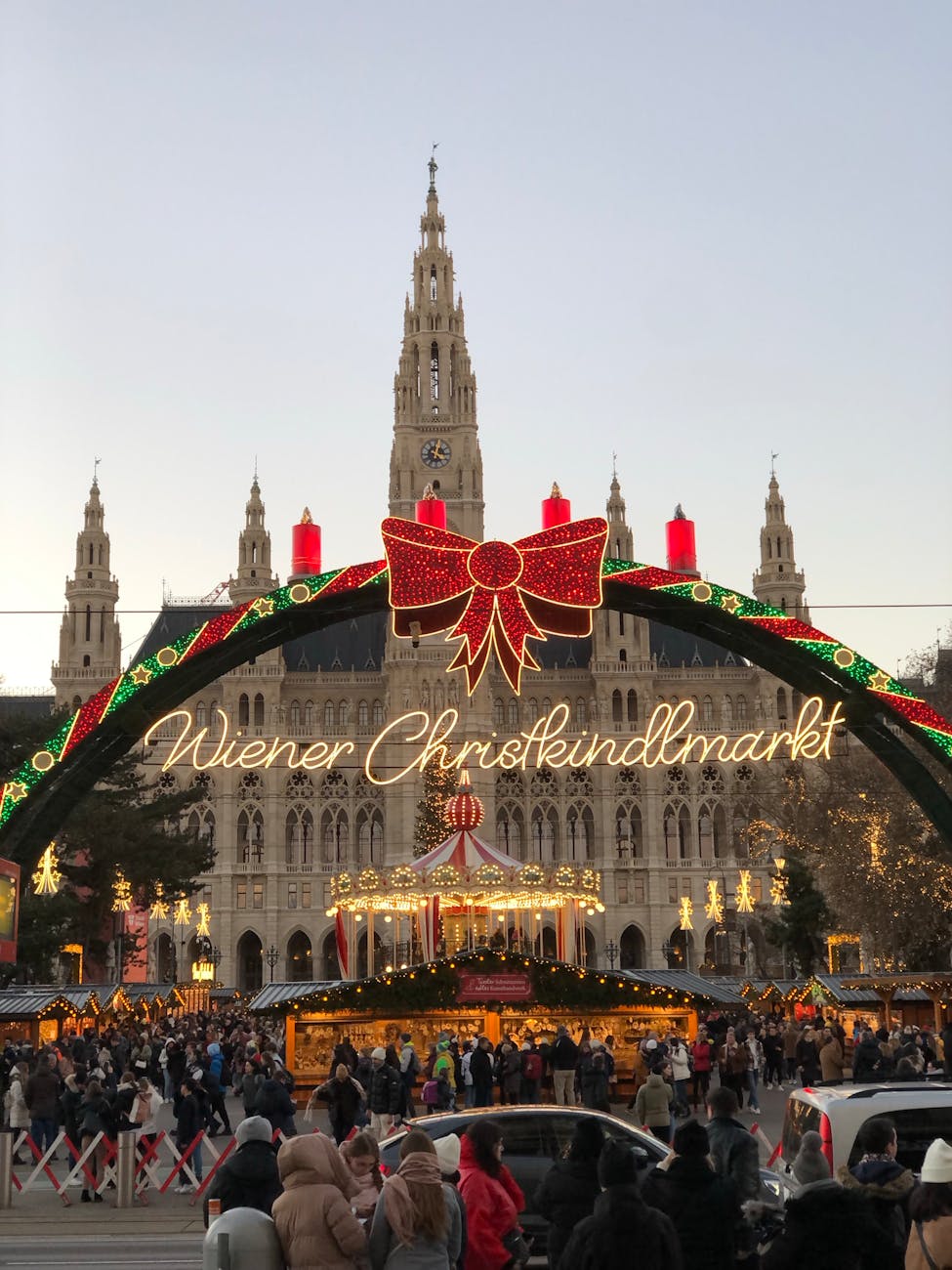
Belvedere Palace Christmas Market
The Belvedere Christmas market opens from November 22 to December 31, 2026 in front of the Upper Belvedere. This smaller, more intimate market is particularly romantic — the baroque palace glows behind rows of wooden chalets, and the reflection pool adds to the atmosphere. The craft selection tends toward higher-end artisan goods, and the food quality is excellent.
Art Advent at Karlsplatz
Running from November 21 to December 23, 2026, the Karlsplatz market bills itself as Vienna’s art-focused Christmas market. Stalls showcase genuine handcrafted goods — ceramics, jewelry, textiles, and wood carvings made by the artists themselves. It’s the best market for finding unique, authentic gifts rather than mass-produced souvenirs. The market has a family-friendly atmosphere with children’s workshops and live craft demonstrations.
Am Hof Christmas Market
One of Vienna’s oldest market squares hosts a traditional Advent market from November 15 to December 23, 2026. The Am Hof market has a more local, less touristy character than the Rathausplatz mega-market. The baroque facades of the surrounding buildings create a particularly atmospheric setting, and the market features an excellent selection of regional food products.
Spittelberg Christmas Market
The narrow cobblestone lanes of Spittelberg (7th District) host a charming small market from mid-November through December 23. The Biedermeier-era houses decorated with lights create an intimate, village-like atmosphere that’s uniquely different from the grand palace markets. Stalls focus on handmade crafts, artisan jewelry, and local designers. The surrounding neighborhood restaurants make it easy to combine market browsing with dinner.
Prater Winter Market
The Wintermarkt am Riesenradplatz at the Prater runs from mid-November through early January 2027, combining Christmas market charm with Prater amusement park rides. The giant Ferris Wheel (Riesenrad) turns slowly above the market stalls, making for spectacular photography. This market is particularly good for families with children who want to combine festive shopping with rides.
New Year’s Eve (Silvester) in Vienna
Vienna’s Silvesterpfad (New Year’s Eve Trail) transforms the city center into one of Europe’s largest open-air New Year’s celebrations. From 2 PM on December 31 until 2 AM on January 1, a trail of stages, food stalls, and entertainment points winds through the Inner City — from Stephansplatz to the Rathaus, Graben, and beyond. Each stop features different music and food, from waltz orchestras to DJs, from Viennese specialties to international cuisine.
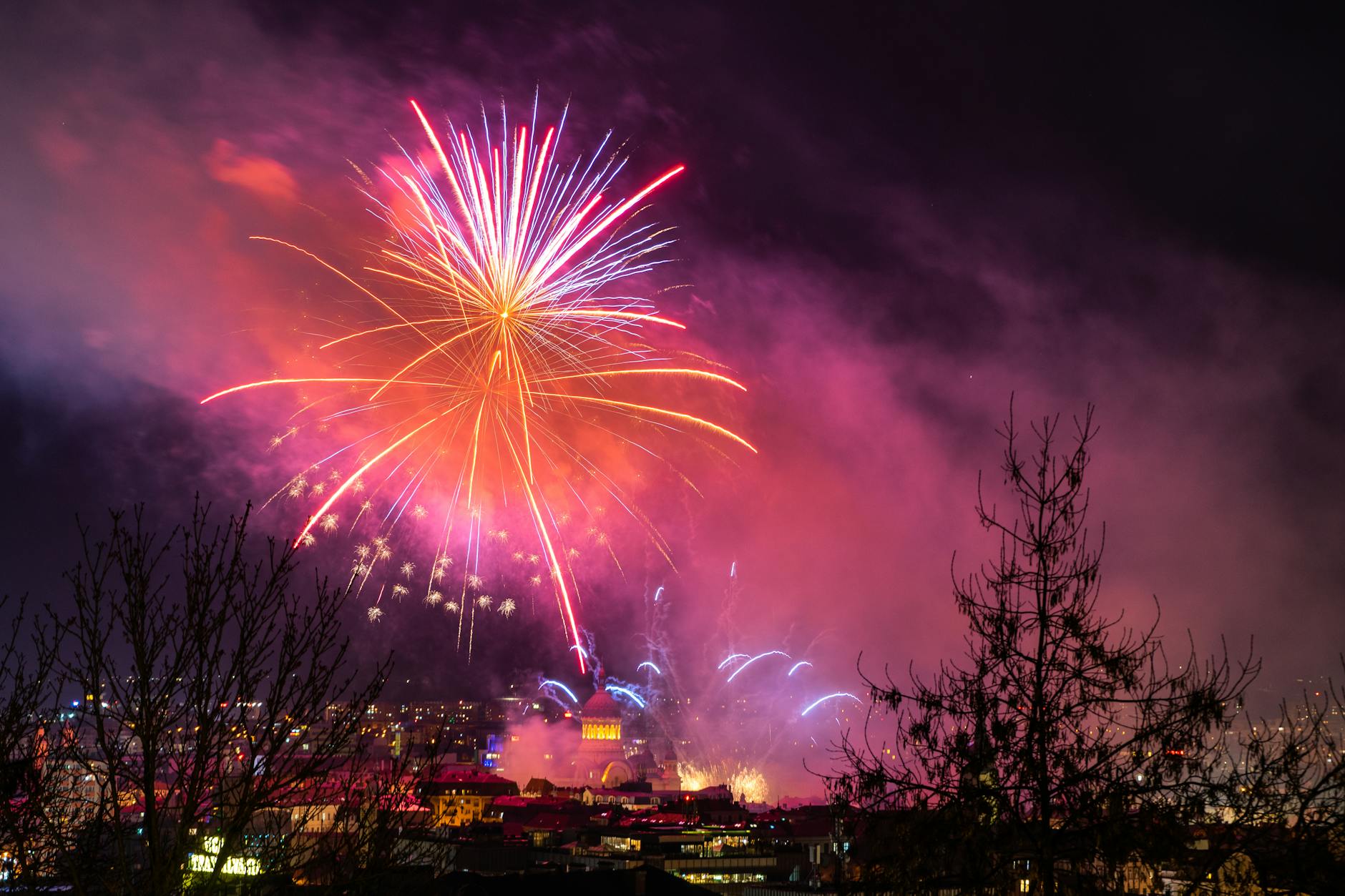
At midnight, the Pummerin — the great bell of St. Stephen’s Cathedral — rings in the New Year, followed by fireworks over the city. Thousands of people waltz in the streets to the Blue Danube, broadcast through loudspeakers. It’s romantic, festive, and uniquely Viennese.
The New Year’s Concert
The Vienna Philharmonic New Year’s Concert from the Golden Hall of the Musikverein is broadcast live to over 90 countries and watched by more than 50 million people. Getting tickets is extraordinarily difficult (they’re allocated by lottery, with registration opening around January each year for the following year’s concert). However, the rehearsal on December 30 and the preview on December 31 morning are slightly easier to access. Register at wienerphilharmoniker.at well in advance.
The Vienna Opera Ball (Opernball)
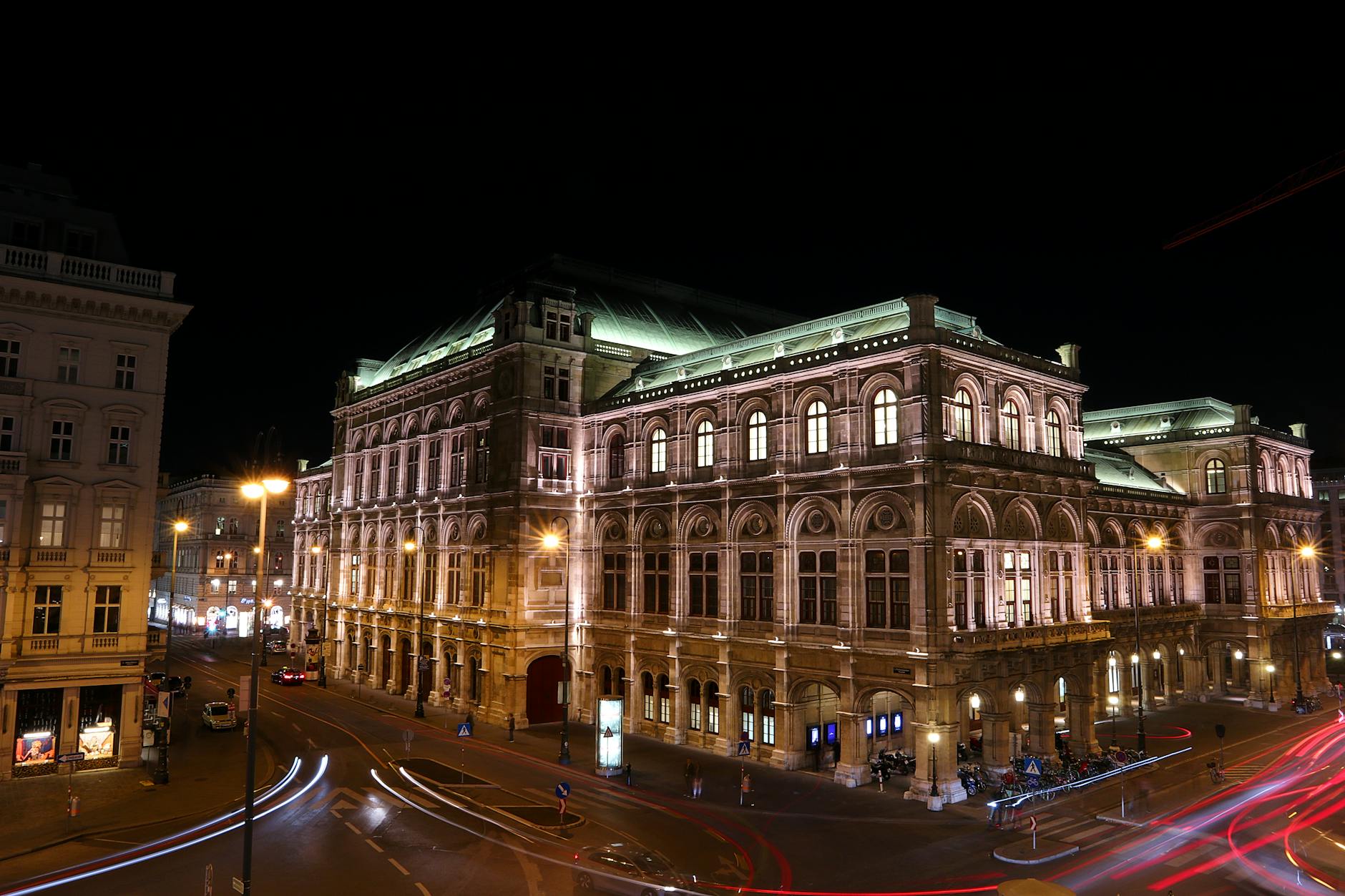
Held annually in February (the Thursday before Ash Wednesday), the Vienna Opera Ball is Austria’s most prestigious social event. The entire interior of the State Opera is transformed into a ballroom, with the stage floor raised to create a seamless dancing surface. Around 5,000 guests attend in white tie and floor-length gowns, and the evening’s opening ceremony — featuring debutantes performing a choreographed waltz — is broadcast live on Austrian television.
Tickets start at approximately €315 for standing room, with seated boxes reaching €23,000+. For most visitors, watching the opening ceremony broadcast in a café or hotel lobby is a more realistic (and still magical) way to experience the event. Numerous other balls take place throughout the Fasching (carnival season) from January through March — the Kaffeesiederball (Coffee Makers’ Ball), Philharmonikerball, and many others offer more accessible entry prices.
Spring Events (March–May)
Easter Markets (Ostermärkte)
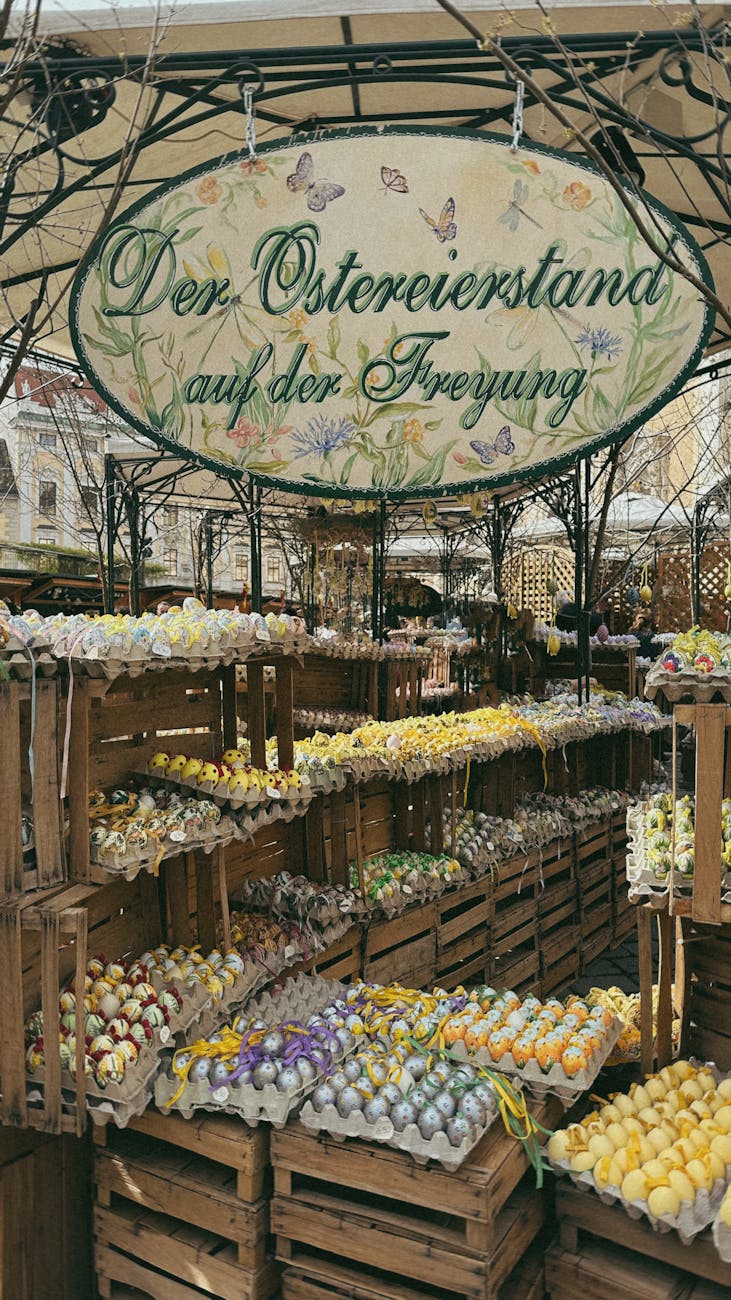
Vienna’s Easter markets bring color and joy to the city in March or April. The most popular markets include the Schönbrunn Palace Easter Market (in the palace courtyard, featuring traditional crafts, egg painting, and a petting zoo), the Freyung Ostermarkt (one of the oldest Easter markets, known for hand-painted eggs and artisan foods), and the Am Hof Easter Market (with live music and children’s activities).
Easter markets typically run for 2–3 weeks leading up to Easter Sunday. They’re smaller and less crowded than Christmas markets but equally charming, with spring flowers, handcrafted decorations, and seasonal food like Osterschinken (Easter ham) and Osterlamm (Easter lamb cake).
Vienna Festival (Wiener Festwochen)
Running from mid-May through mid-June, the Wiener Festwochen is Vienna’s premier arts festival, featuring theater, dance, music, and performance art from around the world. The opening weekend includes a free concert on Rathausplatz that attracts tens of thousands. The festival program spans avant-garde theater, international dance companies, and classical music, with performances in venues across the city.
Vienna City Marathon
Held in April, the Vienna City Marathon draws over 40,000 runners from around the world along a scenic route passing the Ringstraße, Schönbrunn Palace, and the Danube. Even if you’re not running, the atmosphere is electric — live music stages, cheering crowds, and a festival-like energy throughout the city.
Summer Events (June–August)
Donauinselfest (Danube Island Festival)
Europe’s largest free open-air music festival takes place on Danube Island from July 3–5, 2026. Three days of music across multiple stages — pop, rock, electronic, world music, and Austrian acts — attract up to 3 million visitors over the weekend. Entry is completely free. The island setting along the Danube, with beach bars and food stalls, creates a festival atmosphere unlike anything else in the city.
Film Festival at Rathausplatz
From late June through August (June 28 – August 31, 2026), the square in front of City Hall transforms into a massive open-air cinema and food festival. A giant screen shows opera performances, ballet, classical concerts, and music films every evening for free. The surrounding food stalls — over 30 vendors representing cuisines from around the world — make it a destination for eating as much as watching. Bring a blanket or claim one of the free seats early.
Summer Night Concert (Sommernachtskonzert)
The Vienna Philharmonic’s Summer Night Concert takes place on June 19, 2026 in the gardens of Schönbrunn Palace. This free outdoor performance attracts over 100,000 music lovers who spread across the palace grounds with picnic blankets to enjoy a world-class orchestra in one of the world’s most beautiful settings. Arrive early to secure a good position — gates typically open at 5:30 PM with the concert beginning at 8:30 PM.
ImPulsTanz Festival
Vienna’s international dance festival runs through July and August, featuring contemporary dance performances, workshops, and installations across venues citywide. It’s one of Europe’s most important contemporary dance events, attracting performers and audiences from around the globe.
Autumn Events (September–November)
Vienna Wine Hiking Day (Wiener Weinwandertag)
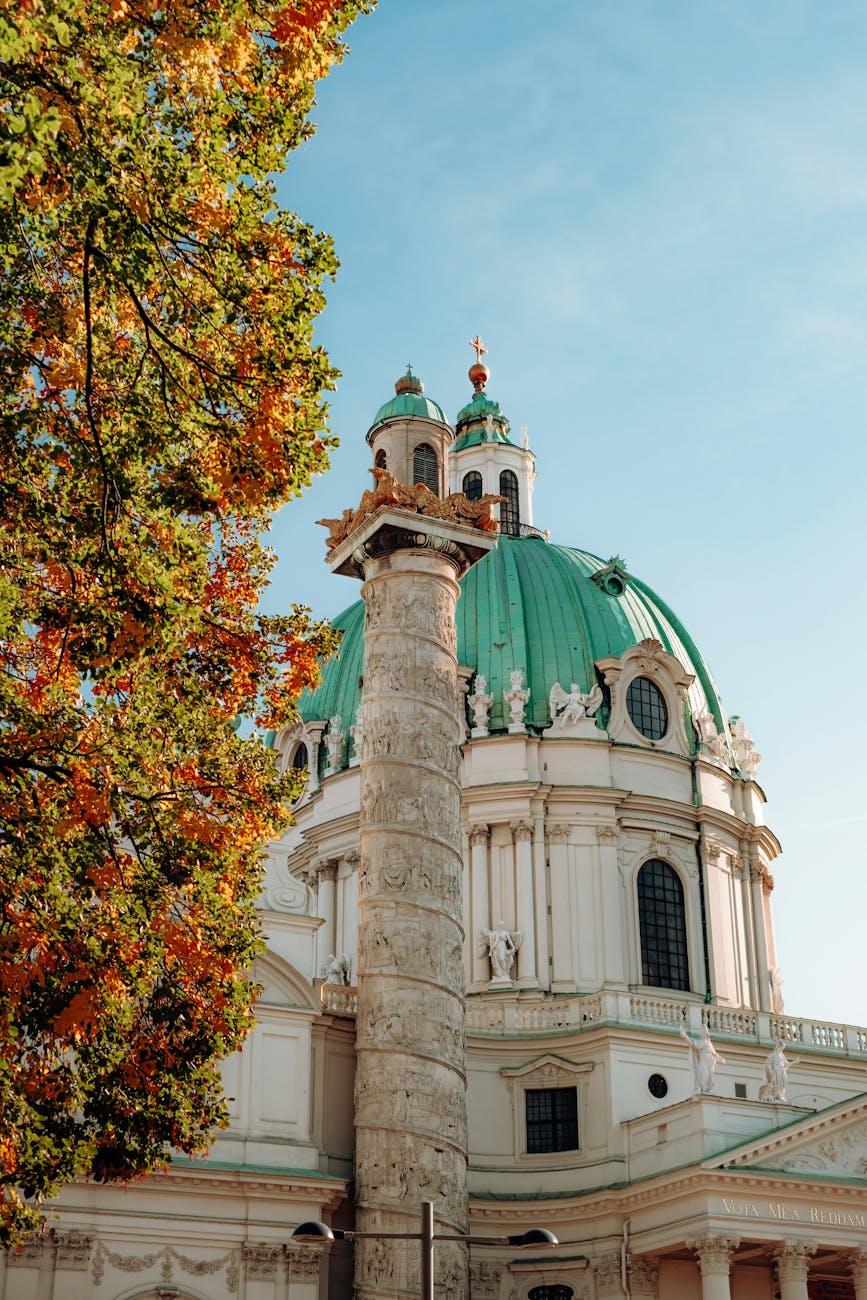
Held on the last weekend of September, this beloved event opens three marked hiking trails through Vienna’s vineyards — yes, Vienna is one of the few capital cities in the world with working vineyards within its city limits. The trails wind through the Kahlenberg, Nussdorf, and Stammersdorf wine areas, with tasting stations along the way where local Heurigen serve their wines. It’s free to walk the trails, and tastings are very affordable.
Viennale (Vienna International Film Festival)
Austria’s most important film festival runs for two weeks in October, screening international art-house cinema, documentaries, and Austrian premieres across multiple venues including the historic Gartenbaukino and Metro Kinokulturhaus. The Viennale attracts filmmakers, critics, and cinephiles, and many screenings sell out quickly — book early via viennale.at.
Long Night of Museums (Lange Nacht der Museen)
Held annually on a Saturday in early October, this event opens over 100 museums, galleries, and cultural institutions across Vienna from 6 PM until 1 AM — all accessible with a single €15 ticket that also includes a shuttle bus network connecting the venues. It’s an incredible way to experience Vienna’s museum landscape in a single evening, with many institutions offering special exhibitions, performances, and behind-the-scenes access.
National Holiday (October 26)
Austria’s National Holiday on October 26 commemorates the country’s declaration of permanent neutrality in 1955. In Vienna, the Hofburg Palace opens its doors for free, the Austrian military holds an open day with displays and demonstrations, and many museums offer free or reduced entry. It’s a surprisingly family-friendly day with a festive atmosphere throughout the city center.
Winter Events Beyond Christmas (December–February)
Vienna Ice World (Wiener Eistraum)
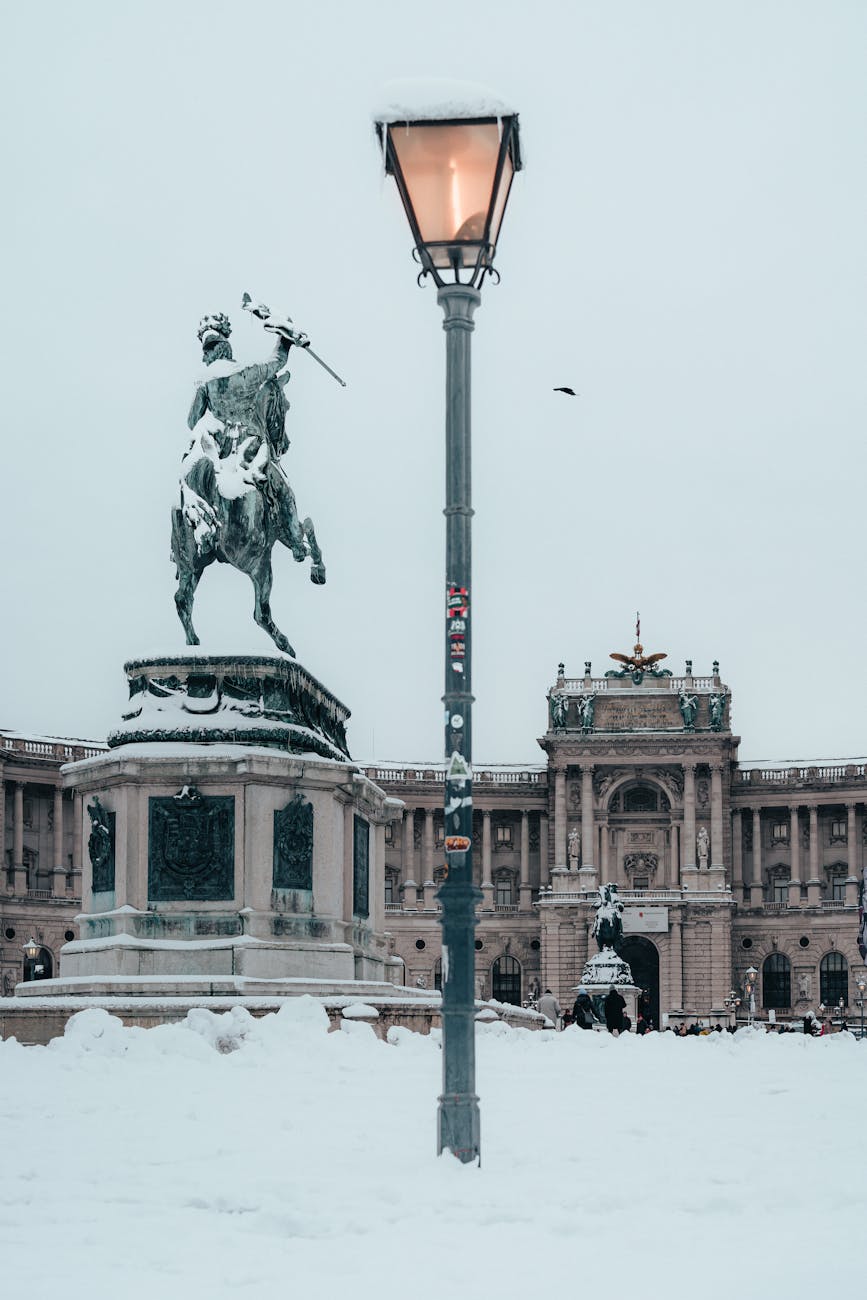
From late January through early March, the square in front of the Rathaus transforms into a massive ice skating rink — actually multiple interconnected rinks winding through the park, covering over 9,000 square meters. Evening sessions under lights are particularly atmospheric. Skate rental is available, and warm drinks and snacks are sold at surrounding stalls. Entry is approximately €8 for adults.
Fasching (Carnival Season)
Vienna’s carnival season runs from January 11 through Ash Wednesday (February 18, 2026), featuring over 450 balls across the city. While the Opera Ball is the most famous, dozens of others are accessible to visitors — each organized by a different professional guild, cultural association, or institution. The Kaffeesiederball (Coffee Makers’ Ball) in the Hofburg, the Rudolfina-Redoute masked ball, and the Blumenball (Flower Ball) are among the most beautiful. Ball tickets typically range from €80–€200 per person.
Month-by-Month Quick Reference
January: Vienna Ice World opens, Fasching ball season begins, winter sales in shops.
February: Opera Ball, peak of ball season, Valentine’s Day concerts at historic venues.
March: Easter markets begin, spring awakening in palace gardens.
April: Vienna City Marathon, Easter celebrations, Schönbrunn gardens in bloom.
May: Wiener Festwochen (Vienna Festival) opens, Prater season begins, longer evenings.
June: Donauinselfest, Rathausplatz Film Festival opens, Summer Night Concert, Vienna Pride.
July: ImPulsTanz dance festival, Rathausplatz Film Festival continues, Danube Island swimming.
August: Film Festival continues, Heurigen season peaks, late summer warmth.
September: Wine Hiking Day, grape harvest in Vienna’s vineyards, Genuss-Festival food event.
October: Viennale Film Festival, Long Night of Museums, National Holiday (Oct 26).
November: Christmas markets open (from mid-month), cozy coffeehouse season.
December: Christmas markets at full capacity, New Year’s Eve Silvesterpfad, New Year’s Concert lottery.
When Is the Best Time to Visit Vienna?
Every season has its magic, but here’s our honest assessment for different traveler types:
For Christmas markets: Late November to mid-December — markets are open, festive atmosphere is building, but crowds haven’t peaked yet. The week before Christmas is most crowded.
For pleasant weather and outdoor events: June — the Summer Night Concert, Donauinselfest, and Film Festival all begin, temperatures are warm but not scorching, and daylight extends past 9 PM.
For budget travelers: January–February (excluding ball dates) — accommodation prices are at their lowest, and Vienna Ice World provides affordable entertainment.
For wine and food lovers: September–October — grape harvest, wine hiking, Heurigen at their best, and the Genuss-Festival celebrating Austrian gastronomy.
For cultural immersion: May — the Wiener Festwochen brings world-class performing arts, spring weather is ideal for walking, and summer crowds haven’t arrived.
Practical Tips for Seasonal Events
Book accommodation early for Christmas and New Year. Hotels fill up and prices peak during the Advent season (late November through January 1). Book at least 2–3 months ahead for the best options.
Dress warmly for winter markets. Vienna’s Christmas markets are outdoor events, and December temperatures average 0–3°C. Layers, warm boots, gloves, and a hat are essential — but the Glühwein helps too.
Register for the New Year’s Concert lottery early. The ballot for the following year’s concert typically opens in January/February. Even if you don’t win tickets, the rehearsal concert on December 30 is another option.
Check event websites for exact dates. Some events shift annually. The Vienna Tourist Board’s website (wien.info) maintains an updated events calendar.
Combine events with regular sightseeing. Most seasonal events are in or near major tourist areas, making it easy to combine market visits with museum trips, palace tours, and restaurant reservations.
Christmas Market Food and Drink: A Culinary Guide
Vienna’s Christmas markets are as much about eating and drinking as they are about shopping. The culinary traditions are deeply rooted and delicious. Glühwein (mulled wine) is the signature drink — red wine heated with cinnamon, cloves, star anise, and orange peel. Each market has its own recipe, and the mugs are collectible (pay a deposit, return for refund, or keep as a souvenir). Punsch — particularly the Advent version with rum, fruit juice, and spices — is equally popular and comes in numerous variations including Kinderpunsch (non-alcoholic for children).
For food, start with Maroni (roasted chestnuts), sold piping hot from glowing braziers — the quintessential Christmas market snack. Kartoffelpuffer (crispy potato pancakes) are served with applesauce or garlic cream sauce. Langos (fried dough with garlic or cheese toppings) comes from Hungary but has been adopted wholeheartedly by Vienna’s markets. Raclette — melted Swiss cheese scraped over bread and potatoes — is perfect winter fuel. And don’t miss the Lebkuchen (gingerbread hearts), Bratäpfel (baked apples filled with marzipan), and Kaiserschmarrn (torn pancake with powdered sugar and plum sauce) for dessert.
Hidden Gem Markets: Beyond the Tourist Trail
While Rathausplatz and Schönbrunn get the most attention, several smaller markets offer more authentic experiences with fewer crowds:
Weihnachtsdorf am Alten AKH (Old General Hospital): Set in the courtyard of the former hospital (now part of the University campus), this market has a student-friendly, local atmosphere with handmade crafts, affordable food, and live music. It’s one of the least touristy markets in the center.
Türkenschanzpark Christmas Market: In the 18th District, this tiny neighborhood market is surrounded by a beautiful park and frequented almost exclusively by locals. The craft selection is small but genuine, and the atmosphere is wonderfully intimate.
Schloss Wilhelminenberg: A small market at this hilltop palace in the 16th District offers panoramic views over the city along with Christmas stalls. Coming here at sunset, with Vienna’s lights twinkling below, is genuinely magical.
Advent at the Freyung: This elegant square in the 1st District hosts one of Vienna’s oldest Advent markets, dating back to 1772. It has a more upscale, artisanal character than the larger markets, with quality crafts, gourmet food products, and a sophisticatea clientele.
Christmas Market Tips from Locals
Go on weekday evenings. Friday and Saturday evenings at Rathausplatz can be almost uncomfortably crowded. Tuesday and Wednesday evenings offer the same atmosphere with half the people.
Visit multiple markets. Each has its own character — Rathausplatz for spectacle, Karlsplatz for crafts, Spittelberg for intimacy, Schönbrunn for grandeur. Plan to visit at least three for a complete experience.
Arrive early for the best market on each stop. Stalls open around 10–11 AM, and the morning hours are peaceful and uncrowded — ideal for serious craft shopping.
Budget approximately €20–€30 per market visit. That covers 2–3 drinks, a meal, and maybe one small souvenir. Markets accept cash and card, though some smaller stalls may be cash-only.
Layer your clothing. You’ll be outdoors for extended periods, often standing still while browsing. Wind-proof outer layers, thermal socks, and warm gloves make the difference between enjoyment and endurance.
Don’t buy handicrafts at Rathausplatz. The large market has some mass-produced goods mixed with genuine crafts. For authentic, handmade items, Karlsplatz Art Advent and Spittelberg are more reliable.
Family-Friendly Seasonal Events
Vienna excels at family-oriented seasonal programming. During the Christmas market season, the Rathausplatz market features a children’s area with a merry-go-round, craft workshops where kids can make their own candles and decorations, and a dedicated children’s Punsch stand serving warm non-alcoholic drinks.
The Schönbrunn Palace Christmas market offers a nativity workshop, cookie decoration stations, and regular appearances by Christkind (the Austrian gift-bringer). The Prater Winter Market combines Christmas stalls with amusement park rides — the Riesenrad (Ferris Wheel) turns above the market, and children’s rides operate throughout the season.
In spring, the Easter markets feature egg-painting workshops, petting zoos, and puppet shows. The Schönbrunn Easter Market is particularly well-equipped for children, with craft activities and live animal displays.
Summer brings the Donauinselfest with dedicated family and children’s areas, and the Rathausplatz Film Festival screens family-friendly content alongside its opera and ballet programming. The Danube Island itself is a summer paradise for families — free playgrounds, safe swimming areas, and flat cycling paths.
Sustainable and Responsible Tourism at Seasonal Events
Vienna is increasingly committed to sustainable event management. Several Christmas markets now use reusable cup systems (pay a deposit, return the cup) rather than disposable containers. The Karlsplatz Art Advent market prioritizes locally produced, handmade goods and has strict criteria for vendor selection to ensure authenticity and sustainability.
The city encourages visitors to reach seasonal events by public transport — all major markets are within walking distance of U-Bahn stations, and Wiener Linien often adds extra services during peak Christmas market hours. Several markets are switching to LED lighting and renewable energy sources to reduce their environmental footprint.
As a visitor, you can contribute by choosing markets that emphasize local crafts over imported goods, bringing your own reusable cup for hot drinks (some stalls offer a small discount), and using public transport rather than taxis to reach market locations.
Photography Tips for Seasonal Events
Vienna’s seasonal events offer extraordinary photography opportunities. For Christmas markets, the golden hour before sunset (around 4 PM in December) creates beautiful warm light against the festive decorations. After dark, the illuminated stalls and architectural backdrops are stunning — use a tripod or stabilize against a railing for sharp night shots. The reflection of Christmas lights in the Belvedere’s pool is one of Vienna’s most photogenic seasonal shots.
For New Year’s Eve, position yourself on the Graben or near Stephansplatz for fireworks shots — the cathedral spire against exploding fireworks is an iconic Vienna image. For the Summer Night Concert, arrive early to secure a position in front of the Schönbrunn Palace, where the orchestra performs against the illuminated baroque facade.
Easter markets are best photographed in morning light, when the colorful eggs and spring flowers glow against the historic square backdrops. The Freyung Easter market with its baroque fountain and pastel-painted eggs is particularly photogenic.
Booking Concerts and Cultural Events
Many of Vienna’s seasonal performances sell out well in advance. Here’s how to secure tickets:
Vienna State Opera: The season runs September through June. Tickets go on sale about 2 months before each performance via wiener-staatsoper.at. Standing room tickets (€13–€15) are sold at the box office 80 minutes before curtain — arrive at least 60 minutes early. For the Opera Ball, tickets are released in January and sell out within hours.
Musikverein: Tickets for the Golden Hall concerts — including the legendary New Year’s Concert — are available through musikverein.at. The New Year’s Concert lottery registration typically opens in January/February for the following year’s event. Regular season concerts offer standing room from €6.
Wiener Festwochen: The festival program is announced in March, with ticket sales starting in April. Free opening concert tickets are distributed on a first-come basis. Book popular shows immediately upon release — marquee performances sell out on the first day.
Viennale: The film festival program is published about two weeks before the event. Tickets go on sale both online and at the festival box office. Weekday daytime screenings are easiest to get; opening and closing night galas sell out fastest.
Weather by Season: What to Expect
Knowing what weather to expect helps you pack right and plan activities accordingly:
Winter (December–February): Average temperatures hover between -2°C and 4°C. Snow is possible but not guaranteed — Vienna gets about 20–30 snow days per year. December is the wettest winter month. Days are short (sunrise ~7:30 AM, sunset ~4:00 PM in mid-December). Dress in warm layers, waterproof boots, and bring gloves and a hat.
Spring (March–May): Temperatures climb from 5°C in March to 20°C in May. April can be unpredictable — pack layers and an umbrella. May is often gorgeous with long sunny days and comfortable walking weather. Palace gardens and parks are at their most beautiful.
Summer (June–August): Warm to hot, with averages of 20–27°C and occasional heatwaves above 35°C. Vienna has become notably warmer in recent years. Thunderstorms are common in July and August. Sunscreen, light clothing, and a water bottle are essential. Air conditioning is not universal in older buildings.
Autumn (September–October): Perhaps Vienna’s most pleasant season — mild temperatures (12–20°C), golden light, and autumn foliage in parks and vineyards. Rain increases in November, and temperatures drop quickly. The famous “Goldener Herbst” (golden autumn) in September and early October is ideal for outdoor activities and wine country day trips.
Planning Your Trip Around Seasonal Events
If a specific seasonal event is your primary reason for visiting Vienna, here’s when to start planning:
6+ months ahead: New Year’s Concert lottery registration, Opera Ball tickets, peak-season hotel reservations for Christmas week.
3–4 months ahead: Wiener Festwochen tickets, accommodation for Christmas market season, restaurant reservations for New Year’s Eve dinners.
1–2 months ahead: Regular opera and concert tickets, hotel bookings for Easter and summer events, Viennale film festival planning.
Last minute: Christmas market visits (no tickets needed), walking tours, Vienna Ice World, Easter markets, most summer outdoor events.
The beauty of Vienna’s seasonal calendar is that many of its best events — Christmas markets, the Silvesterpfad, Film Festival at Rathausplatz, wine hiking, and National Holiday — are either free or very affordable. You don’t need to plan months ahead to experience seasonal Vienna at its finest. Simply being in the city at the right time and walking through the right square can deliver moments of pure magic — a choir singing in a candlelit church, the first snow falling on a Christmas market, or a summer evening listening to opera under the stars at Rathausplatz.
Whatever season draws you to Vienna, the city will reward you with experiences that go beyond the ordinary. These aren’t tourist attractions manufactured for visitors — they’re living traditions that Viennese people themselves treasure, opening their arms to welcome anyone who wants to share in the celebration. From the first Glühwein of November to the last waltz of Fasching, Vienna’s seasonal events are the heartbeat of a city that knows how to celebrate life beautifully.
Leave a Reply