How many days in Vienna is one of the most common questions travelers ask when planning an Austrian adventure — and the answer depends entirely on what kind of experience you’re after. Vienna is a city of extraordinary depth: imperial palaces that take half a day each, world-class museums you could lose yourself in for hours, a coffeehouse culture that rewards slow mornings, and neighborhoods that reveal their charm only to those who wander without a schedule. Rush through it in a day and you’ll see the postcard highlights; give it a week and you’ll begin to understand why Vienna consistently ranks among the world’s most livable cities.
In this guide, we break down exactly what you can realistically see and do in Vienna across different trip lengths — from a whirlwind 1-day stopover to a leisurely 7-day deep dive — so you can choose the perfect duration for your travel style, interests, and budget.
The Quick Answer: How Many Days Is Enough?
Before we dive into the day-by-day breakdowns, here’s the key thing to understand about Vienna: it’s not a city you can speed through. Unlike cities where the major attractions are standalone experiences, Vienna’s sights are layered with context — the Hofburg makes more sense after you’ve walked through the streets the Habsburgs built around it, and the coffeehouses only reveal their magic when you give yourself permission to sit for an hour. The timelines below assume a moderate pace with some downtime built in, because that’s what Vienna demands.
If you’re short on time, here’s our recommendation at a glance:
1 day: Enough for a taste — the historic center, Stephansdom, a coffeehouse, and one major highlight like the Hofburg or Belvedere. You’ll leave wanting more.
2 days: The realistic minimum for first-time visitors. You can cover the essential inner city, one major palace (Schönbrunn or Belvedere), and get a genuine feel for Viennese atmosphere.
3 days: The sweet spot for most travelers. Three days let you see all the major highlights without feeling rushed, with time for a proper coffeehouse experience, a museum deep-dive, and some neighborhood exploration.
4–5 days: The ideal duration for a thorough Vienna experience. You’ll have time for all the big attractions plus day trips, hidden gems, Heurigen wine taverns, and the kind of spontaneous discoveries that make a trip memorable.
6–7 days: Perfect for travelers who want to truly live in Vienna rather than just visit. A week lets you explore at a Viennese pace — slow mornings, long museum visits, evening concerts, day trips to the Wachau Valley or Bratislava, and the freedom to revisit favorite spots.
1 Day in Vienna: The Highlights Sprint
Having just one day in Vienna is far from ideal, but it’s surprisingly workable thanks to the city’s compact layout. The entire historic center sits within the Ringstraße — a grand boulevard that encircles the Inner City — and everything within it is walkable. Your strategy should be simple: focus on the highlights within the Ring in the morning, choose one “must-see” attraction for the afternoon, and save the evening for atmosphere.
One day in Vienna is tight but doable if you’re strategic. The good news is that Vienna’s historic center is remarkably compact — most major landmarks within the Ringstraße are within a 20-minute walk of each other. Here’s what you can realistically fit in:
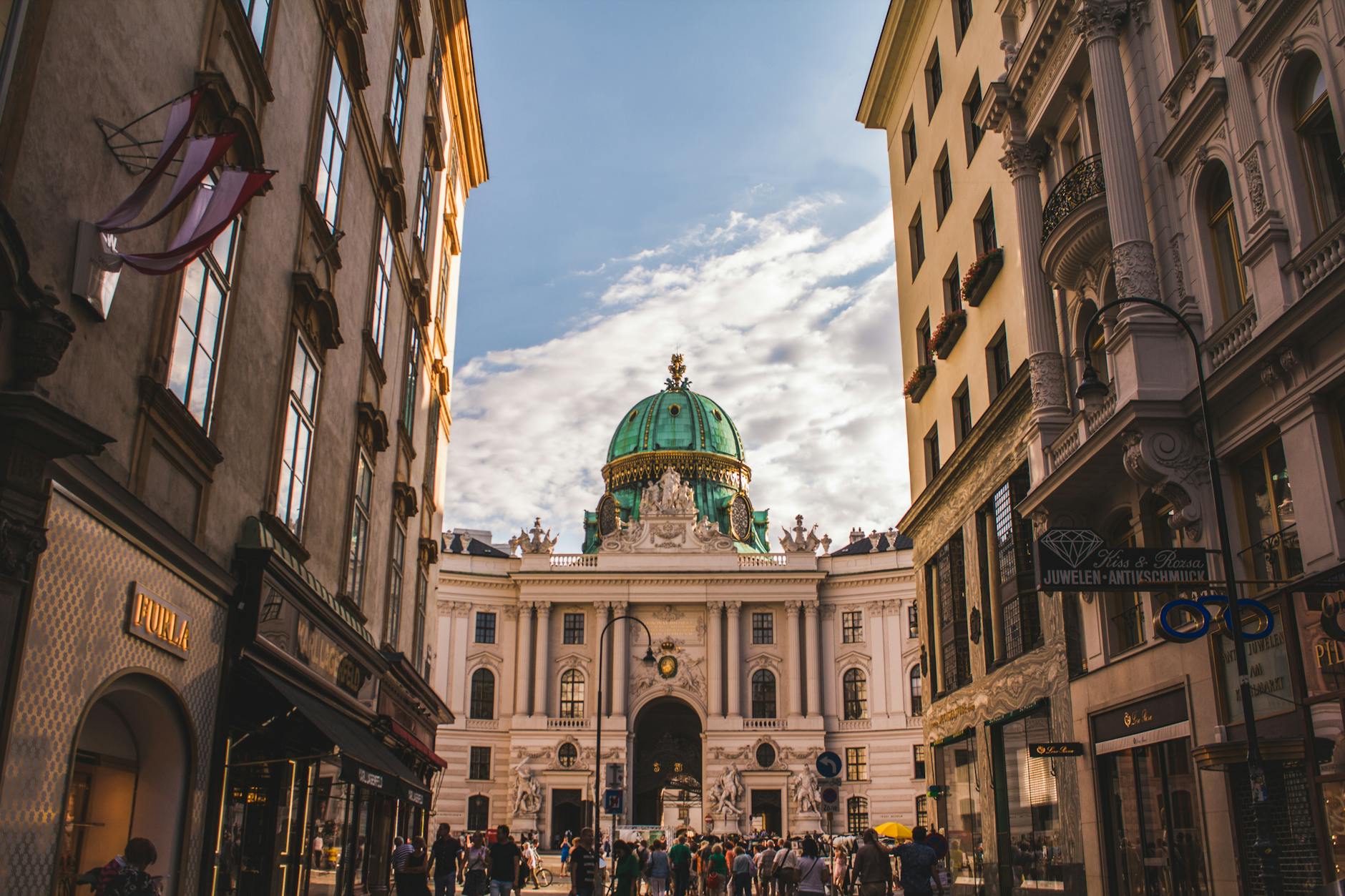
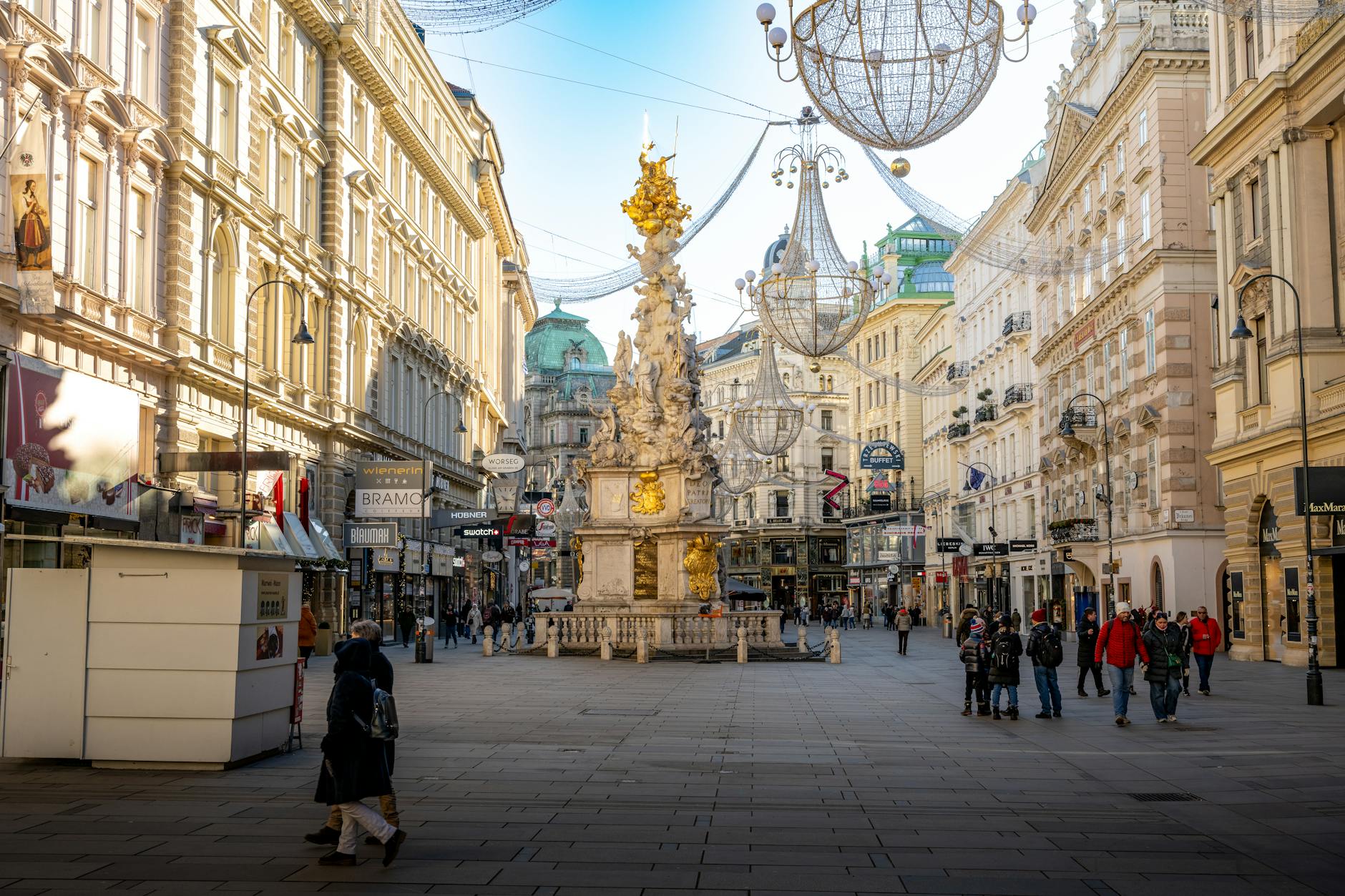
Morning (8:00–12:00): Start at Stephansdom (St. Stephen’s Cathedral) as it opens, climb the South Tower for panoramic views, then walk through the Graben and Kohlmarkt — Vienna’s most elegant shopping streets — to the Hofburg Palace. Spend an hour exploring the Imperial Apartments or simply walking through the courtyards and Heldenplatz.
Midday (12:00–14:00): Stop for lunch and a melange (Viennese coffee) at a traditional coffeehouse like Café Central or Café Hawelka. This isn’t just eating — it’s experiencing one of Vienna’s most important cultural traditions.
Afternoon (14:00–17:00): Choose one major attraction: the Belvedere (home to Klimt’s “The Kiss”), the Kunsthistorisches Museum (art history museum with an extraordinary collection), or a tram ride out to Schönbrunn Palace for the palace tour and gardens.
Evening: Walk along the Ringstraße to admire the illuminated Opera House, Parliament, and Rathaus. If time allows, catch a standing-room ticket at the Vienna State Opera (from just €13).
2 Days in Vienna: The Essential Experience
Two days transforms your Vienna visit from a sprint into something approaching a real experience. You’ll still need to be selective, but you can now cover the major palaces, at least one world-class museum, and — crucially — have enough time to actually sit in a coffeehouse without watching the clock. Two days is our recommended minimum for anyone whose primary destination is Vienna rather than just passing through.
Two days gives you breathing room to move beyond the absolute highlights and start experiencing Vienna’s atmosphere rather than just ticking boxes.
Day 1: The Historic Heart
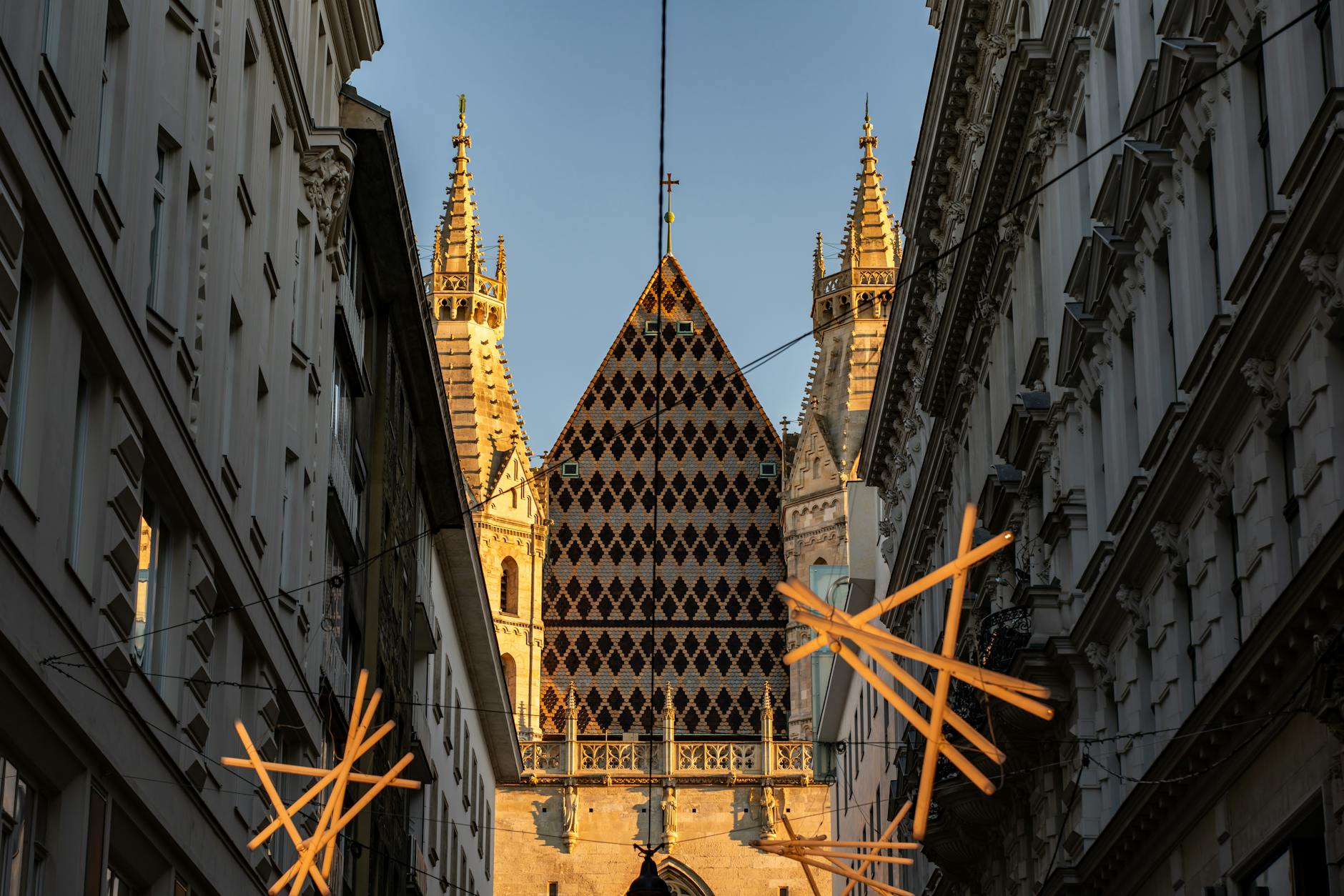
Morning: Begin at Stephansdom, taking time to explore the interior, descend into the catacombs (home to the bones of thousands of plague victims and the preserved organs of Habsburg rulers), and climb the 343 steps of the South Tower for the best views over Vienna’s rooftops. The North Tower can be reached by elevator and offers different but equally impressive perspectives. Walk through the Graben and Kohlmarkt to the Hofburg, where you can visit the Imperial Apartments, Sisi Museum, and Silver Collection (allow 1.5–2 hours).
Afternoon: Head to the Kunsthistorisches Museum on Maria-Theresien-Platz — one of the world’s great art museums, with masterpieces by Bruegel, Vermeer, Raphael, and Caravaggio. Even a focused visit takes 2–3 hours. Afterward, stroll through the MuseumsQuartier — one of the world’s largest cultural complexes, and a great spot to sit in the courtyard with a drink.
Evening: Dinner in the Innere Stadt (1st District), followed by an evening walk along the illuminated Ringstraße. Consider standing-room tickets at the Vienna State Opera (go on sale 80 minutes before the performance).
Day 2: Palaces and Neighborhoods
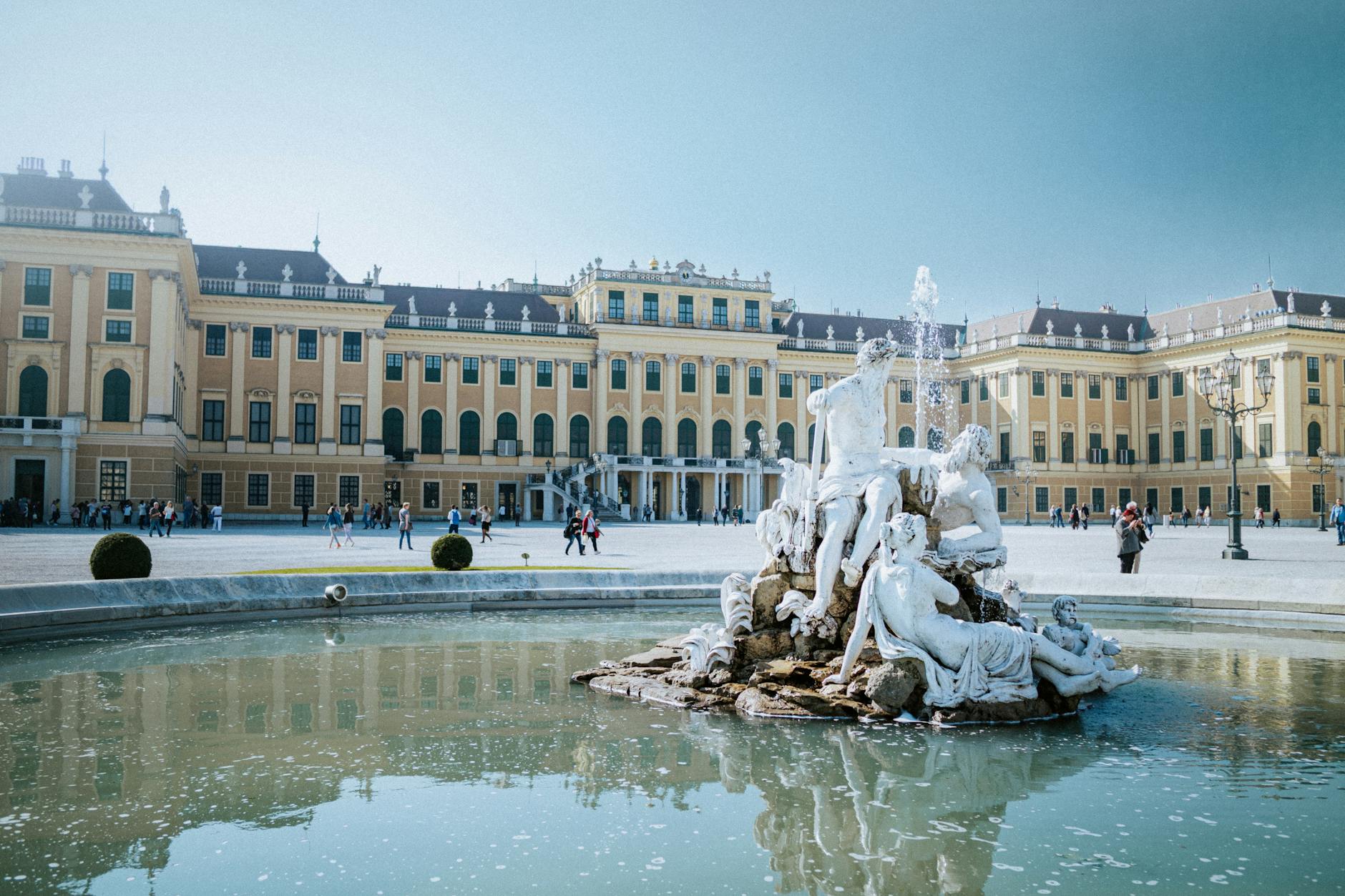
Morning: Take the U4 to Schönbrunn Palace — the former summer residence of the Habsburgs. The Grand Tour covers 40 rooms and takes about an hour, followed by the stunning gardens (free to enter), the Gloriette hilltop pavilion, and the world’s oldest zoo if you’re interested. Allow 3–4 hours total.
Afternoon: Return to the center and visit the Belvedere Palace to see Klimt’s “The Kiss” and the impressive collection of Austrian art. The Upper Belvedere takes about 1.5 hours. Walk through the beautiful gardens connecting the Upper and Lower Belvedere.
Evening: Experience a traditional Viennese Beisl (local restaurant) for Wiener Schnitzel, Tafelspitz, or Kaiserschmarrn. The 7th District (Neubau) has excellent options with a local feel.
3 Days in Vienna: The Sweet Spot
Three days is the duration most travel experts and locals recommend for first-time visitors, and we agree. With three full days, you move beyond the “must-see” checklist and into the realm of genuine exploration. You’ll have time for all the major attractions, a proper neighborhood walk, at least one evening cultural experience, and — perhaps most importantly — the breathing room to follow your curiosity when something unexpected catches your eye.
Three days is what we recommend for most first-time visitors. It’s enough to see all the major sights, experience the coffeehouse culture properly, and explore beyond the tourist center without feeling rushed.
Days 1 & 2: As above
Follow the 2-day itinerary outlined above, which covers the historic center, Hofburg, Kunsthistorisches Museum, Schönbrunn, and Belvedere.
Day 3: Markets, Music, and Local Life
Morning: Start at the Naschmarkt — Vienna’s most famous food market, stretching for over a kilometer along the Wienzeile. Browse the stalls selling spices, cheese, olives, fresh produce, and prepared foods from around the world. On Saturdays, the adjacent flea market adds another dimension. Have brunch at one of the market’s restaurants.
Late morning: Walk through the Freihausviertel (south of Naschmarkt) — a hip neighborhood of independent boutiques, galleries, and cafés. Then visit Karlskirche (St. Charles’s Church) with its impressive baroque dome and the option to take an elevator to the viewing platform.
Afternoon: Explore a museum you missed — the Albertina (modern art and photography), the Leopold Museum (Egon Schiele collection), or the Natural History Museum (stunning building with remarkable collections). Alternatively, take the U1 to Prater for a ride on the iconic Riesenrad (Giant Ferris Wheel) and a walk through the park.
Evening: For a special final evening, book a concert at the Musikverein (home of the Vienna Philharmonic) or enjoy a performance at the Konzerthaus. Alternatively, take tram 38 to a Heuriger wine tavern in Grinzing or bus 35A to Neustift am Walde for local wine and Schrammelmusik — a uniquely Viennese experience.
4–5 Days in Vienna: The Complete Experience
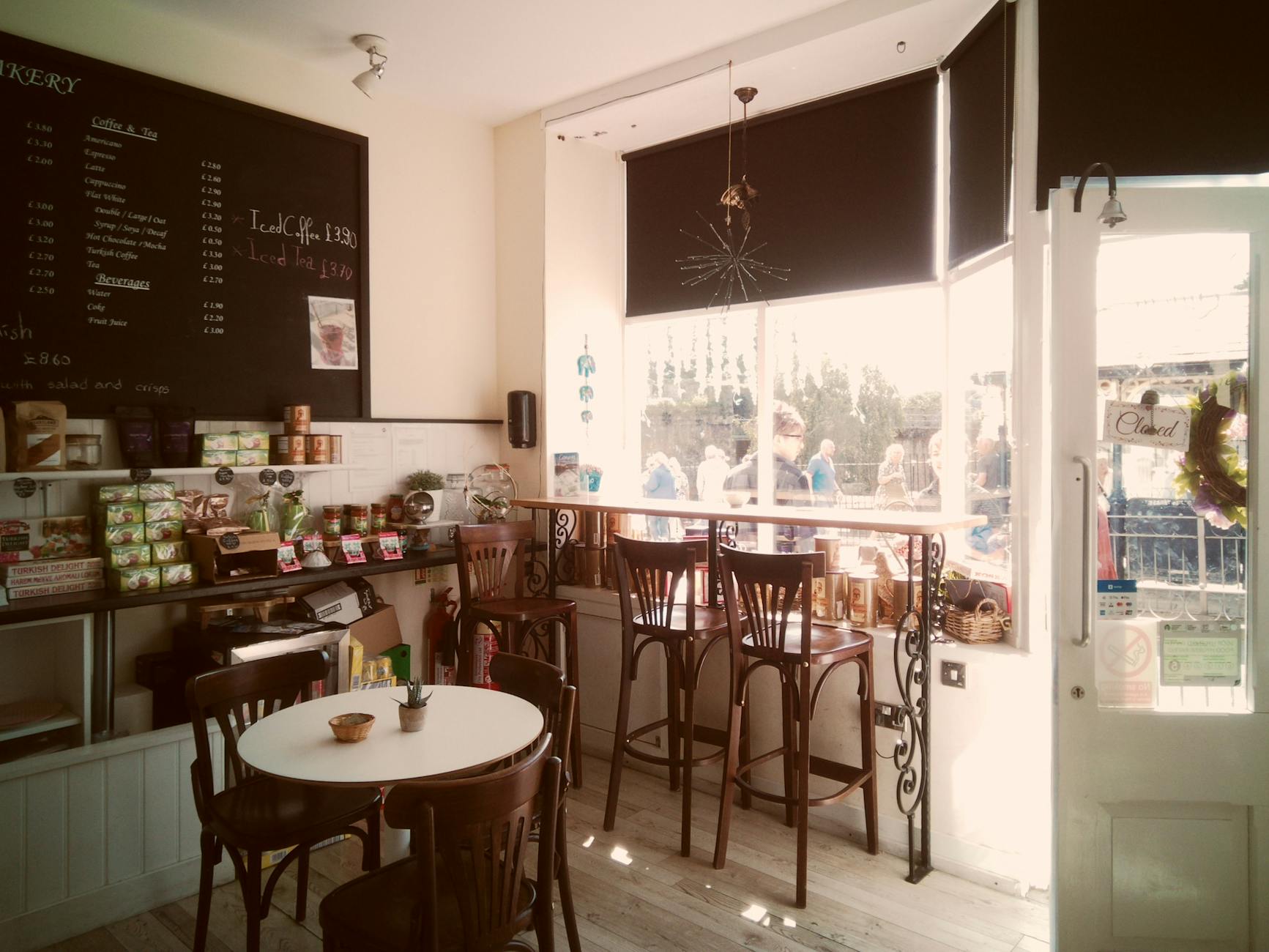
Four to five days is what we consider the ideal trip length for Vienna. This duration lets you see everything you’d see in three days but at a more relaxed pace, with time for day trips, deeper neighborhood exploration, and the kinds of spontaneous experiences that travel memories are made of. You’ll have time to revisit a museum you rushed through, explore the city’s outer districts, visit the Zentralfriedhof (Central Cemetery — resting place of Beethoven, Brahms, Schubert, Strauss, and thousands more, and a surprisingly beautiful park-like space), or simply spend an afternoon reading in a park. This is when Vienna stops being a destination and starts feeling like a temporary home.
With four or five days, you move from “seeing Vienna” to “experiencing Vienna.” This is the duration we consider ideal — you’ll have time for everything important plus the flexibility for spontaneous discoveries, day trips, and the slower pace that Vienna rewards.
Day 4: Hidden Gems and Local Vienna
Morning: Explore the 2nd District (Leopoldstadt) — home to the Karmelitermarkt (a more local alternative to Naschmarkt), the Augarten (with its Baroque gardens and WWII flak towers), and the charming streets around Karmeliterplatz. Visit the Prater green area — not just the amusement park, but the vast public park with walking and cycling paths along tree-lined avenues.
Afternoon: Visit the Hundertwasserhaus — architect Friedensreich Hundertwasser’s wildly imaginative apartment building featuring undulating floors, tree tenants growing from the walls, and a colorful facade that looks like it belongs in a fairy tale — Friedensreich Hundertwasser’s colorful, irregular apartment building — and the nearby KunstHausWien museum. Then explore the 3rd District around the Belvedere, which has a thriving local dining scene.
Evening: Head to a Heuriger in Neustift am Walde or Stammersdorf for an evening of local wine, cold buffet food, and live music in a vineyard garden setting. This is one of the most authentic Viennese experiences you can have.
Day 5: Day Trip or Deep Dive
Use your fifth day for one of these options:
Option A — Wachau Valley: Take a train to Krems (1 hour from Vienna) and explore the UNESCO-listed Wachau Valley — a stunning stretch of Danube lined with vineyards, medieval villages, and castle ruins. Visit Dürnstein (where Richard the Lionheart was imprisoned), taste wines at local producers, and take a river cruise between towns.
Option B — Bratislava: The Slovak capital is just 1 hour from Vienna by train — close enough for a comfortable day trip. Explore the medieval Old Town, Bratislava Castle, and enjoy the city’s excellent café and restaurant scene.
Option C — Vienna Deep Dive: Spend the day exploring what you missed — the Wien Museum, Sigmund Freud Museum, Haus der Musik, or the Jewish Museum. Walk neighborhoods like Josefstadt (8th District) or Margareten (5th District) for a local, non-touristy feel.
6–7 Days in Vienna: Living Like a Local
A week in Vienna is a luxury that pays extraordinary dividends. The city has a rhythm — a particular way that mornings, afternoons, and evenings unfold — that only becomes apparent when you’re not racing between attractions. You’ll start recognizing the barista at your morning café, discover your own favorite bench in the Volksgarten, and find the restaurant that becomes “your place.” This is the duration for travelers who understand that the best travel experiences come from depth, not breadth.
A week in Vienna lets you drop the tourist pace entirely and experience the city the way Viennese people do — with long coffeehouse mornings, unhurried museum visits, evening concerts, and the luxury of returning to places that caught your eye.
What to Add With Extra Days
Deeper museum exploration: Vienna has over 100 museums. With a week, you can properly visit the Kunsthistorisches Museum (without rushing), the Albertina, the Leopold Museum (Schiele and Klimt), the Wien Museum (reopened after renovation with free entry), the Natural History Museum, and specialized gems like the Globe Museum (the only one of its kind in the world) or the Clock Museum. The Third Man Museum, dedicated to the iconic film noir shot in post-war Vienna, is another fascinating niche choice.
Multiple day trips: Combine the Wachau Valley and Bratislava trips, or add Baden bei Wien (a charming spa town 30 minutes south) or Semmering (scenic railway through the Alps, a UNESCO World Heritage site).
Neighborhood deep dives: Spend mornings exploring different districts — the Servitenviertel (elegant boutiques and cafés in the 9th District), Brunnenmarkt (Vienna’s longest street market in the 16th District), or Kahlenberg (panoramic hilltop views over the city and Danube).
Cultural immersion: Attend a full opera performance (not just standing room), book a Spanish Riding School morning exercise session, take a Wiener Werkstätte walking tour, or join a Viennese cooking class to learn how to make proper Schnitzel and Apfelstrudel.
Factors That Affect How Many Days You Need
Your Travel Style
Your travel style is probably the single biggest factor in determining how many days you need. Be honest with yourself about how you travel — there’s no wrong answer, but knowing your pace helps you plan realistically.
Fast-paced sightseers who are comfortable seeing 3–4 major attractions per day can cover Vienna’s highlights in 2–3 days. Slow travelers who prefer to linger at coffeehouses, browse markets, and explore neighborhoods at random should plan for 4–5 days minimum. Cultural enthusiasts focused on museums, concerts, and opera could easily fill a week without repeating anything.
Time of Year
Summer (June–August) offers longer daylight hours — you can pack more into each day with sightseeing until 8–9 PM. Winter (December–February) has shorter days but adds Christmas markets, ball season, and ice skating to your agenda, which may require extra time. Spring and autumn offer the best balance of weather and available time.
Day Trips
If you plan day trips to the Wachau Valley, Bratislava, or other destinations, add a day for each. These are full-day excursions — you won’t have much energy for Vienna sightseeing on the same day.
Budget
Longer stays allow you to spread expensive activities across more days and take advantage of multi-day museum passes. The Vienna PASS (€78 for 1 day, €110 for 2 days, €135 for 3 days, €170 for 6 days) includes free entry to over 60 attractions and hop-on hop-off buses. It typically pays for itself in 2–3 days of moderate sightseeing.
Money-Saving Tips for Different Trip Lengths
Your trip length affects not just what you see but what you spend. Here are smart ways to maximize value at each duration:
For 1–2 day trips: Skip the Vienna PASS — it’s hard to make it pay off in such a short time unless you’re visiting 3+ paid attractions per day. Instead, buy individual tickets and prioritize free experiences: walking the Ringstraße, exploring Stephansdom (free entry to the main nave), wandering Schönbrunn gardens (free), and browsing the Naschmarkt.
For 3-day trips: The 3-day Vienna PASS (€135) becomes worthwhile if you plan to visit Schönbrunn Palace, the Kunsthistorisches Museum, the Belvedere, and at least 2–3 smaller attractions. It also includes hop-on hop-off buses, which save on transit. Standing-room tickets at the Opera (€13–€15) are a must.
For 4–7 day trips: The 6-day Vienna PASS (€170) offers the best per-day value. With this duration, you can spread expensive attractions across more days and balance paid sights with free ones. Book accommodation outside the 1st District for better rates — the 2nd, 4th, 7th, and 8th Districts offer great access at lower prices, and Vienna’s public transport makes everything accessible.
Accommodation tip: Vienna hotel prices vary significantly by season. The cheapest months are January and February (outside ball season dates), while December (Christmas markets) and June (peak summer) see the highest rates. Booking 2–3 months ahead typically saves 20–30% compared to last-minute rates.
How Vienna Compares to Other European City Trips
To put Vienna’s ideal trip length in context, here’s how it compares to similar European destinations. Cities like Prague or Budapest can be comfortably covered in 2–3 days, as their main attractions are more concentrated. Paris or London, like Vienna, reward longer stays of 4–5 days. Vienna sits in the middle — smaller than Paris in terms of sheer quantity of sights, but with a depth of cultural experiences (music, coffeehouse culture, wine traditions) that rivals any European capital.
What makes Vienna unique is that its appeal extends well beyond its checklist attractions. The coffeehouse culture, the Heurigen tradition, the classical music scene, the local wine, and the neighborhood character all take time to discover. Cities with comparable cultural depth — Florence, Barcelona, Istanbul — similarly reward stays of 4+ days.
Our Recommendation
For most first-time visitors, 3 days is the sweet spot — enough to see the major highlights without feeling rushed, with time for at least one genuine local experience like a coffeehouse morning or Heuriger evening. If you can extend to 4–5 days, do it — the extra time transforms Vienna from a checklist of sights into a place you actually feel connected to. The city’s charm lies as much in its pace and atmosphere as in its palaces and museums, and you need time to absorb that.
Frequently Asked Questions
Can I see Vienna in a day on a cruise stopover? Yes, but with significant limitations. River cruise passengers typically dock at the Reichsbrücke terminal, about 20 minutes from the center by U-Bahn. Focus on the historic center: Stephansdom, Hofburg courtyards, a quick coffeehouse visit, and a walk along the Graben. Skip outlying attractions like Schönbrunn unless your stopover is 8+ hours.
Is 2 nights enough for Vienna? Two nights (which typically means about 1.5 full days) is tight but workable for the essential highlights. Arrive early on your first day to maximize time. Prioritize the historic center, one major palace, and one evening experience.
Should I get the Vienna PASS? It depends on your sightseeing intensity. If you plan to visit 3+ paid attractions per day, the PASS saves money. For a slower pace with 1–2 attractions daily, individual tickets may be cheaper. The PASS also includes unlimited hop-on hop-off bus use and skip-the-line access at some venues.
What if I have kids? Add at least one extra day to whatever duration you’d plan without children. Vienna has excellent family attractions — Schönbrunn Zoo, the Prater amusement park, the Natural History Museum, and the Haus der Musik — but kids need more breaks, and you’ll want buffer time for playgrounds and ice cream stops.
Whatever duration you choose, remember that Vienna is a city that rewards those who slow down. Skip a museum if it means spending an extra hour at a coffeehouse watching the world go by, or wandering a neighborhood you hadn’t planned to visit. That’s when Vienna reveals its real magic.