Vienna public transport is consistently rated among the best urban transit systems in the world — and for good reason. With five modern metro lines, 29 tram routes, over 120 bus lines, and an integrated ticketing system that makes everything seamlessly connected, getting around Vienna is efficient, affordable, and surprisingly enjoyable. Whether you’re heading from the airport to your hotel, hopping between palaces and museums, or venturing out to the Vienna Woods, this complete guide covers every transport option you’ll need for a stress-free visit in 2026.
Vienna’s public transport network, operated primarily by Wiener Linien, carries over 2.6 million passengers daily across a system that spans more than 1,000 kilometers. The city has invested heavily in modern infrastructure while preserving charming elements like its historic tram network. For tourists, the system is remarkably intuitive — a single ticket works across all modes of transport, zones are simple, and signage is clear. This guide will walk you through every option, from the lightning-fast U-Bahn to leisurely Danube boat trips, so you can navigate Vienna like a local.
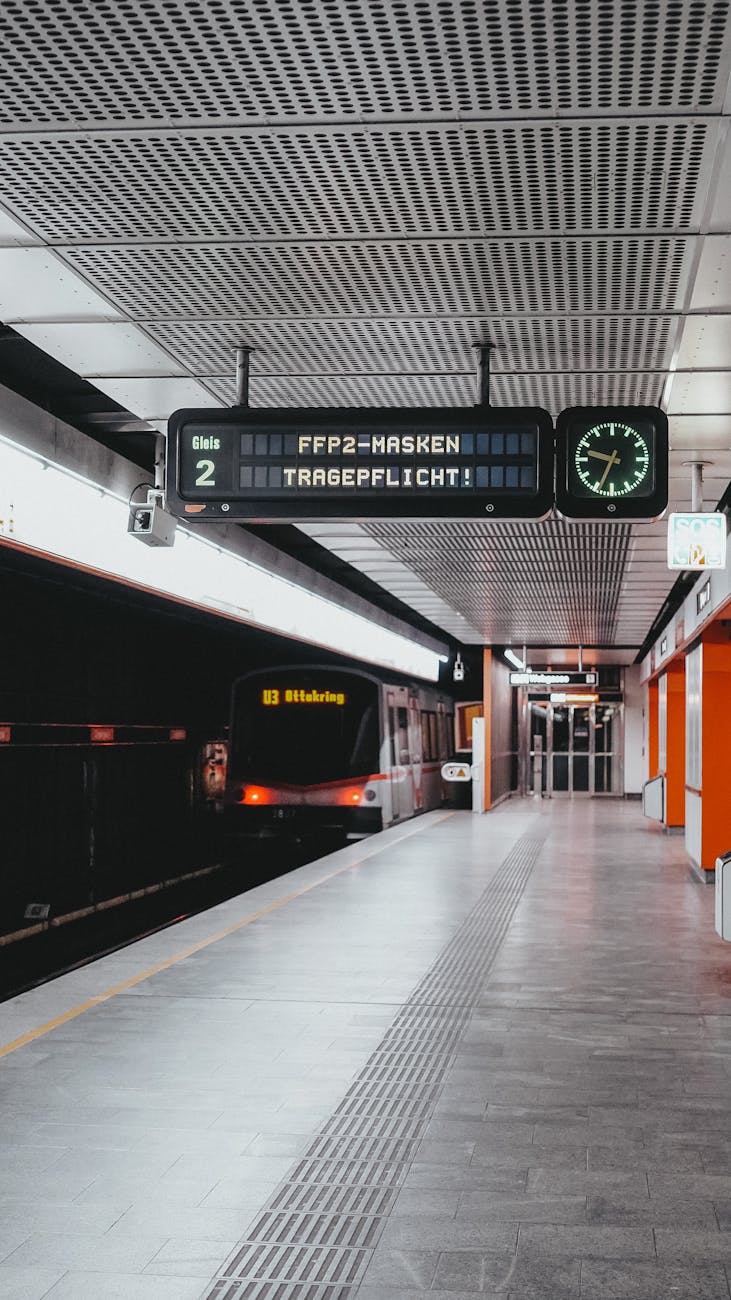
Vienna’s U-Bahn (Metro): The Fastest Way Around
The U-Bahn is Vienna’s underground metro system and the fastest way to traverse the city. With five color-coded lines (U1 through U6, with U5 being the newest addition), 109 stations, and trains arriving every 2–5 minutes during peak hours, it’s the transport backbone that most visitors rely on daily.
U-Bahn Lines at a Glance
U1 (Red Line) runs north-south and is essential for tourists, connecting Stephansplatz (St. Stephen’s Cathedral) with the Prater amusement park, the Danube, and Reumannplatz in the south. U2 (Purple Line) has been significantly extended and now connects the Rathaus (City Hall) area to new developments in the Donaustadt district. U3 (Orange Line) is the workhorse for sightseeing — it links Westbahnhof to Stephansplatz and Wien Mitte, making it perfect for museum-hopping and shopping along Mariahilfer Straße. U4 (Green Line) follows the Wien River and is your route to Schönbrunn Palace, while also connecting to the Danube Canal nightlife area. U6 (Brown Line) runs along the western edge of the city and is notable for running partly above ground along Otto Wagner’s beautiful Stadtbahn stations — architectural gems in their own right.
Operating Hours
The U-Bahn runs from approximately 5:00 AM until midnight on weekdays, with trains every 2–5 minutes during rush hours and every 7–8 minutes in the evenings. On Friday and Saturday nights (and the eve of public holidays), the U-Bahn runs 24 hours with trains every 15 minutes — perfect for enjoying Vienna’s nightlife without worrying about last trains. On regular weeknights, a comprehensive Nightline bus network takes over from 12:30 AM to 5:00 AM.
Tips for Using the U-Bahn
Vienna’s U-Bahn operates on an honor system — there are no turnstiles or barriers. You simply validate your ticket and walk to the platform. However, plainclothes inspectors conduct frequent random checks, and riding without a valid ticket (Schwarzfahren) incurs an immediate fine of €135 as of 2026. Stations are well-signed in German with universal transit symbols, and digital displays show real-time arrival information. Free WiFi is available at all stations and increasingly on trains themselves.
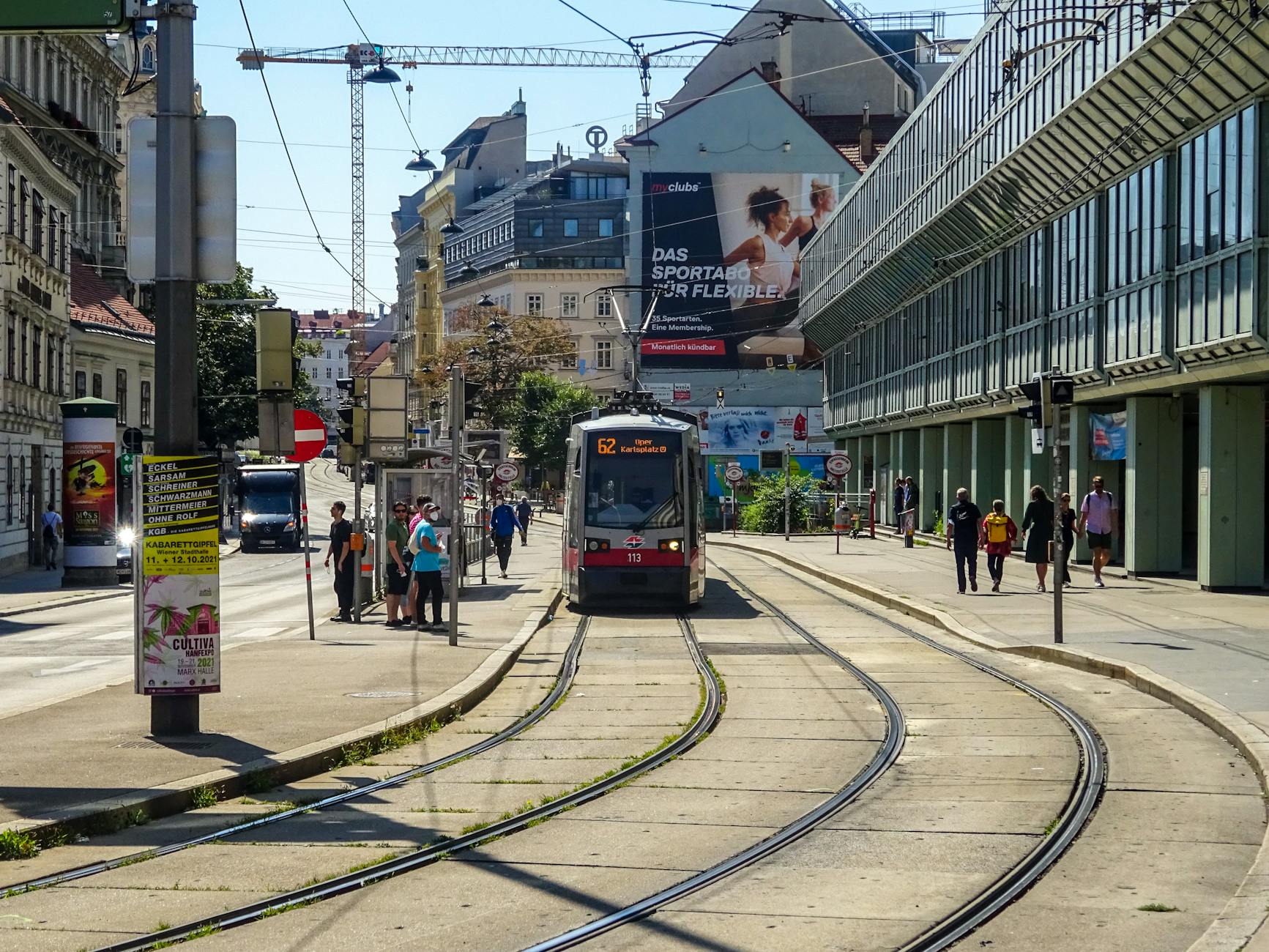
Vienna’s Tram Network: Sightseeing on Rails
Vienna’s tram network (Straßenbahn) is one of the world’s largest, with 29 lines covering over 220 kilometers of track. For tourists, trams are arguably the most enjoyable way to get around — you glide past stunning architecture at street level, and several routes double as impromptu sightseeing tours.
Tourist-Friendly Tram Routes
The most useful tram lines for visitors include Lines 1 and 2, which together form a loop around the Ringstraße — Vienna’s grand boulevard encircling the historic Inner City. Riding either line gives you window views of the State Opera, Parliament, Burgtheater, Rathaus, the University, and the Museums Quarter. Line D runs from the northern wine village of Nussdorf through the city center to the Hauptbahnhof, passing Sigmund Freud’s neighborhood and the Belvedere Palace. Line 71 takes you to the Zentralfriedhof (Central Cemetery), where Beethoven, Brahms, Schubert, and Strauss are buried.
Tram Etiquette and Tips
Trams run from approximately 5:15 AM to 11:45 PM. Board through any door — there’s no front-door-only rule. Validate your ticket in the blue stamping machines inside the tram if you’re using a paper single ticket. Priority seating near the doors is reserved for elderly passengers, pregnant women, and those with disabilities. During peak hours (7:30–9:00 AM and 4:30–6:30 PM), trams can be crowded, so consider traveling slightly off-peak if your schedule allows.
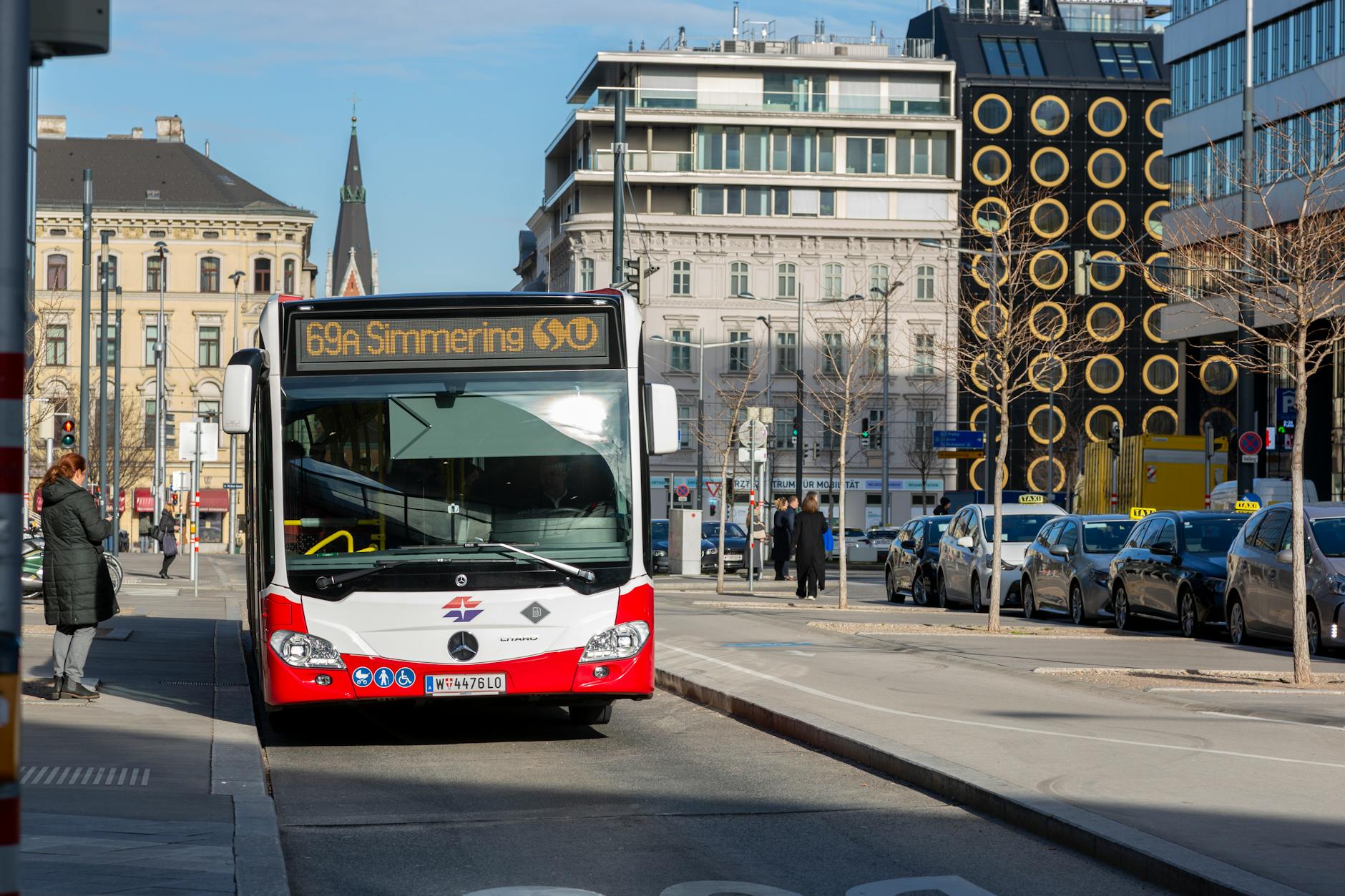
Bus Network: Filling the Gaps
Vienna’s bus network completes the public transport picture, reaching neighborhoods and suburbs that trams and the U-Bahn don’t serve. With over 120 routes, buses are particularly useful for reaching specific attractions like the Heurigen wine taverns in the outer districts or the Lobau nature reserve along the Danube.
Regular bus service mirrors U-Bahn hours (approximately 5:00 AM to midnight). The Nightline bus network consists of 24 routes that converge at Schwedenplatz, operating every 30 minutes from 12:30 AM to 5:00 AM on weeknights. On the routes served by buses, stops are announced in German and displayed on electronic screens inside the vehicle.
Airport Bus Services
The Vienna Airport Lines (operated by Postbus) connect Vienna International Airport with several central locations, including Schwedenplatz/Morzinplatz, Westbahnhof, and Wien Hauptbahnhof. Buses run every 30 minutes, the journey takes 20–30 minutes depending on your stop, and tickets cost approximately €9.50 one way or €16 return. This is a solid budget-friendly option if your hotel is near one of the bus stops.
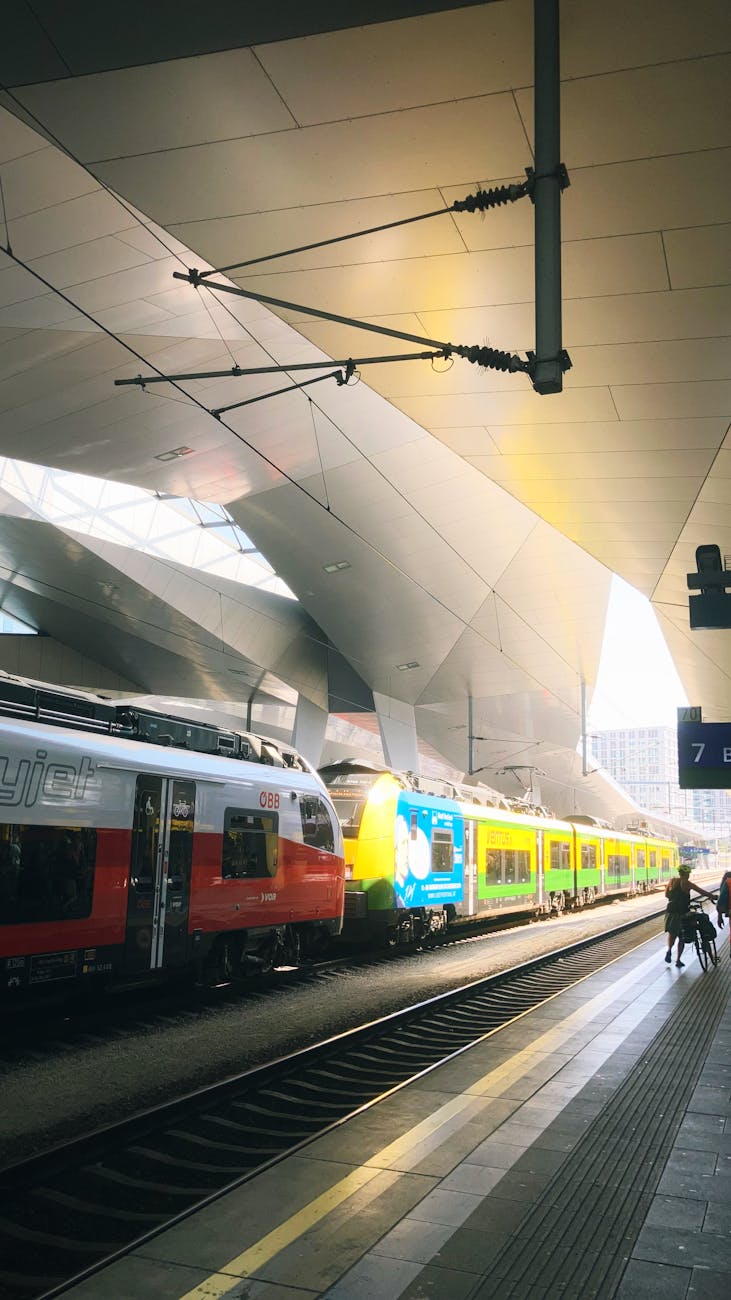
Train Connections: Getting to and from Vienna
Wien Hauptbahnhof (Vienna Central Station)
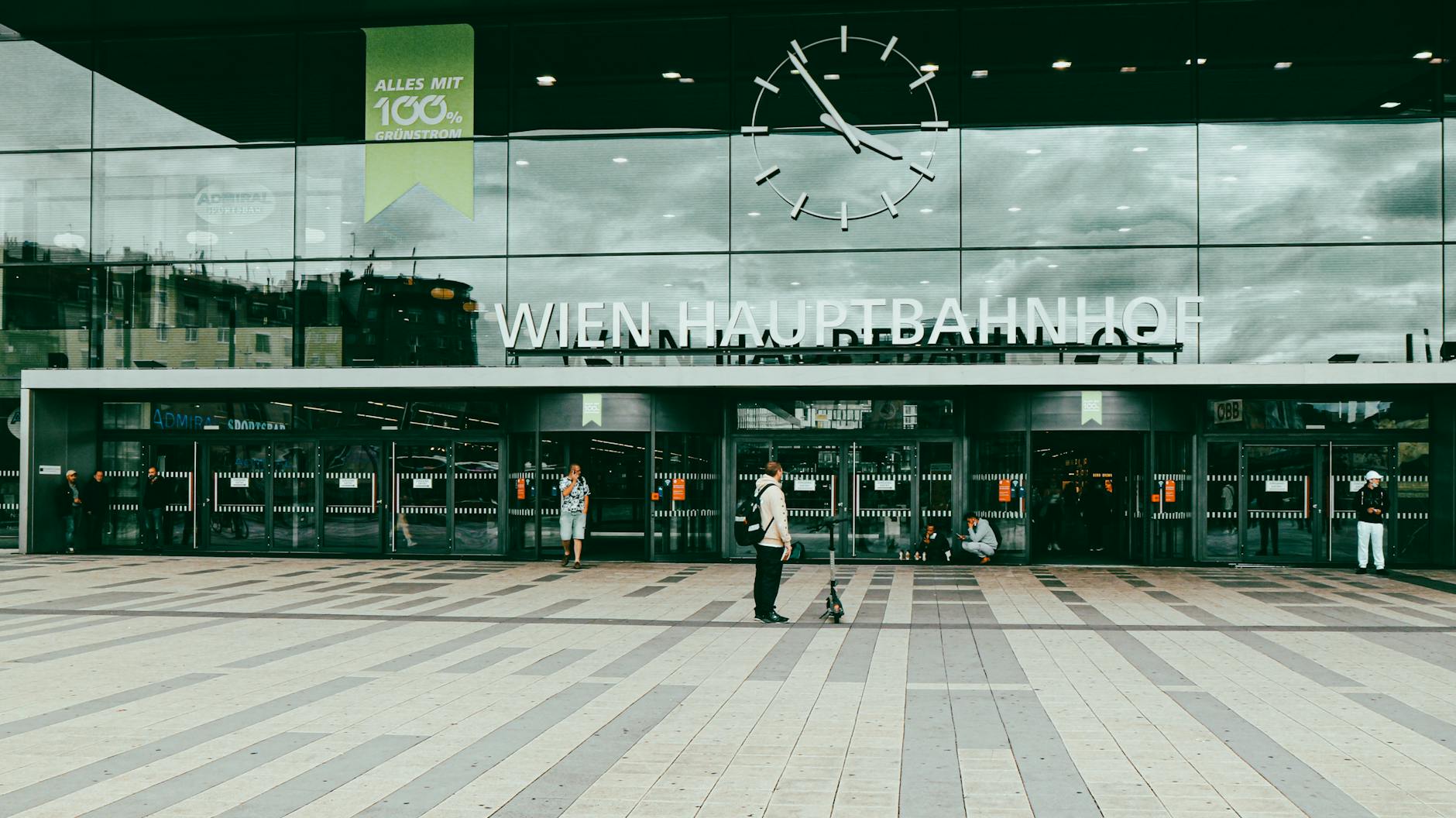
Wien Hauptbahnhof is Vienna’s main railway station and a modern architectural showpiece. Opened in 2014, it replaced the old Südbahnhof and now serves as the central hub for national and international rail connections. From here, you can catch high-speed trains to Salzburg (2.5 hours), Innsbruck (4.5 hours), Munich (4 hours), Budapest (2.5 hours), Prague (4 hours), and Bratislava (just over 1 hour). The station is well-connected to the U-Bahn (U1 line), trams (D, O, 18), and multiple bus routes.
Wien Mitte / Landstraße
Wien Mitte is a key interchange station where the U3, U4, and S-Bahn lines converge. It’s also the city terminus for the City Airport Train (CAT) and the S7 regional train from the airport. The station sits above a large shopping mall (The Mall Wien Mitte) and is within walking distance of the Stadtpark and Belvedere.
Wien Westbahnhof
While no longer the main long-distance station, Westbahnhof remains important as the departure point for Westbahn private rail services to Salzburg and as a U-Bahn (U3, U6) and tram hub. The station area along Mariahilfer Straße is one of Vienna’s busiest shopping districts.
Important 2026 Note: S-Bahn Disruptions
From September 7, 2026, a central section of the inner-city S-Bahn route between Wien Praterstern and Wien Hauptbahnhof will be closed for extensive modernization works, expected to last until late 2027. During this period, additional U-Bahn and bus services will be provided as alternatives. Plan accordingly if your visit falls during this period.
Vienna Airport Transfers: All Your Options
Vienna International Airport (VIE) sits approximately 18 kilometers southeast of the city center. Several transfer options cater to different budgets and preferences:
City Airport Train (CAT)
The CAT is the premium option — a dedicated express train running non-stop between the airport and Wien Mitte station in just 16 minutes. Trains depart every 30 minutes from 6:06 AM to 11:36 PM. Tickets cost €14.90 one way (cheaper if purchased online in advance at around €12). The CAT offers spacious seating, luggage racks, and an in-town check-in facility at Wien Mitte where some airlines allow you to drop your bags and print boarding passes up to 75 minutes before departure.
S7 Regional Train (Best Value)
The S7 train follows a similar route to the CAT but makes several stops along the way, reaching Wien Mitte in about 25 minutes and Wien Praterstern/Floridsdorf beyond that. The major advantage? If you already have a valid Vienna public transport pass, the S7 is included at no extra cost within the city zone. Otherwise, a ticket covering zones 100 + 101 (airport to city) costs just €4.40. Trains run every 30 minutes.
Private Transfer and Taxi
Pre-booked private transfers offer fixed-rate pricing — typically €38–€45 to central Vienna (1st–9th districts). Your driver tracks your flight and adjusts for delays. Standard taxis are metered with fares typically running €36–€50 depending on traffic and time of day. Reputable companies include Taxi 31300 and Taxi 40100. Avoid unlicensed drivers approaching you in the arrivals hall.
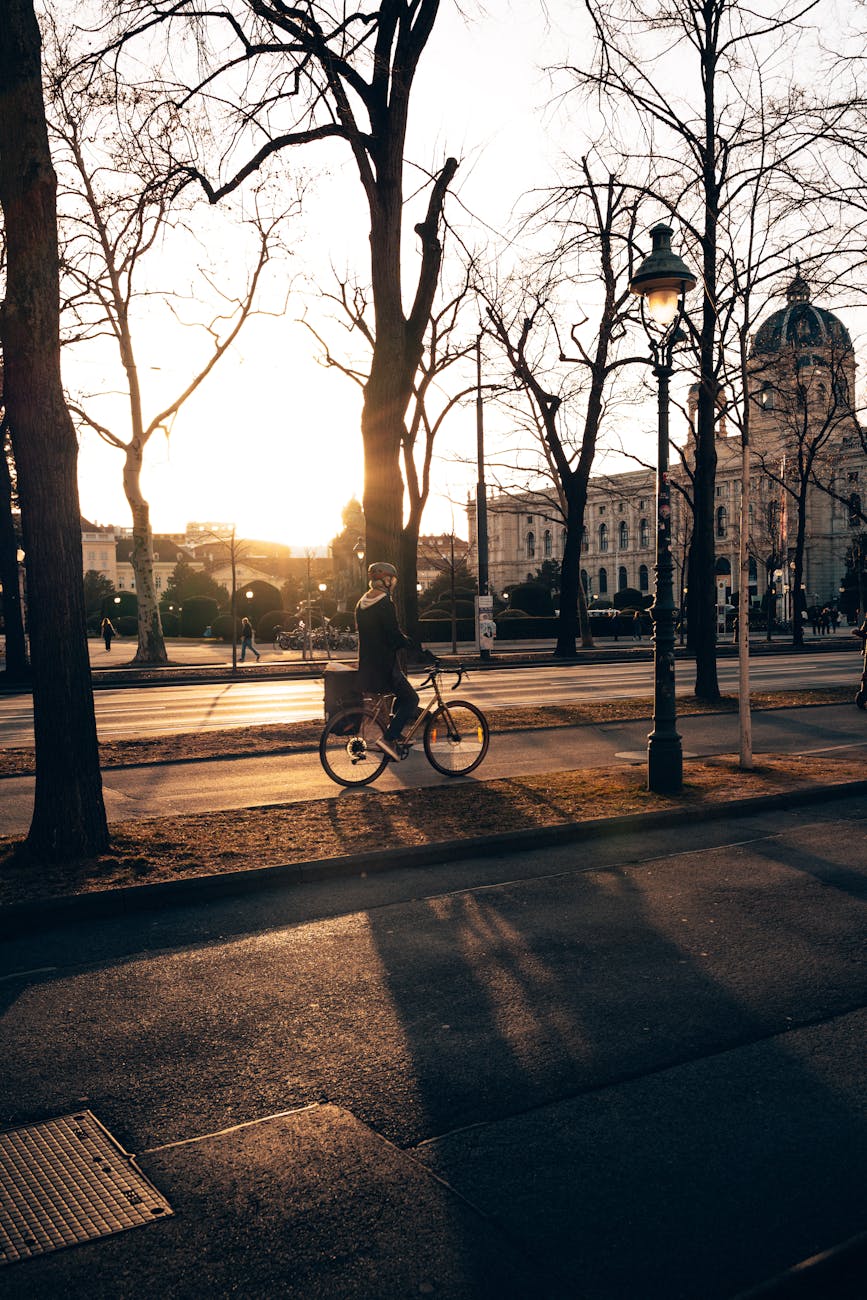
Cycling in Vienna: A Growing Network
Vienna has invested heavily in cycling infrastructure, and with over 1,600 kilometers of bike paths, it’s an increasingly popular way to explore the city. The terrain is mostly flat, making it accessible even for casual cyclists.
WienMobil Rad (Bike Sharing)
Vienna’s public bike-sharing system, WienMobil Rad (which replaced the old Citybike system), operates over 200 stations throughout the city. Registration costs €1, and the first 30 minutes of each ride are free. After that, rates increase incrementally. The bikes can be unlocked via the WienMobil app, making the whole process smartphone-friendly. E-bikes are also available at select stations for a small premium.
Dedicated Cycling Routes
Popular cycling routes include the Ringstraße loop (dedicated bike lane around the historic center), the Danube Island path (21 km of car-free cycling along the Danube), and the route from the city center out to Schönbrunn Palace through the Wienfluss bike path. For longer excursions, the Donauradweg (Danube Cycle Path) extends from Passau through Vienna and onwards to Bratislava — one of Europe’s most famous cycling routes.
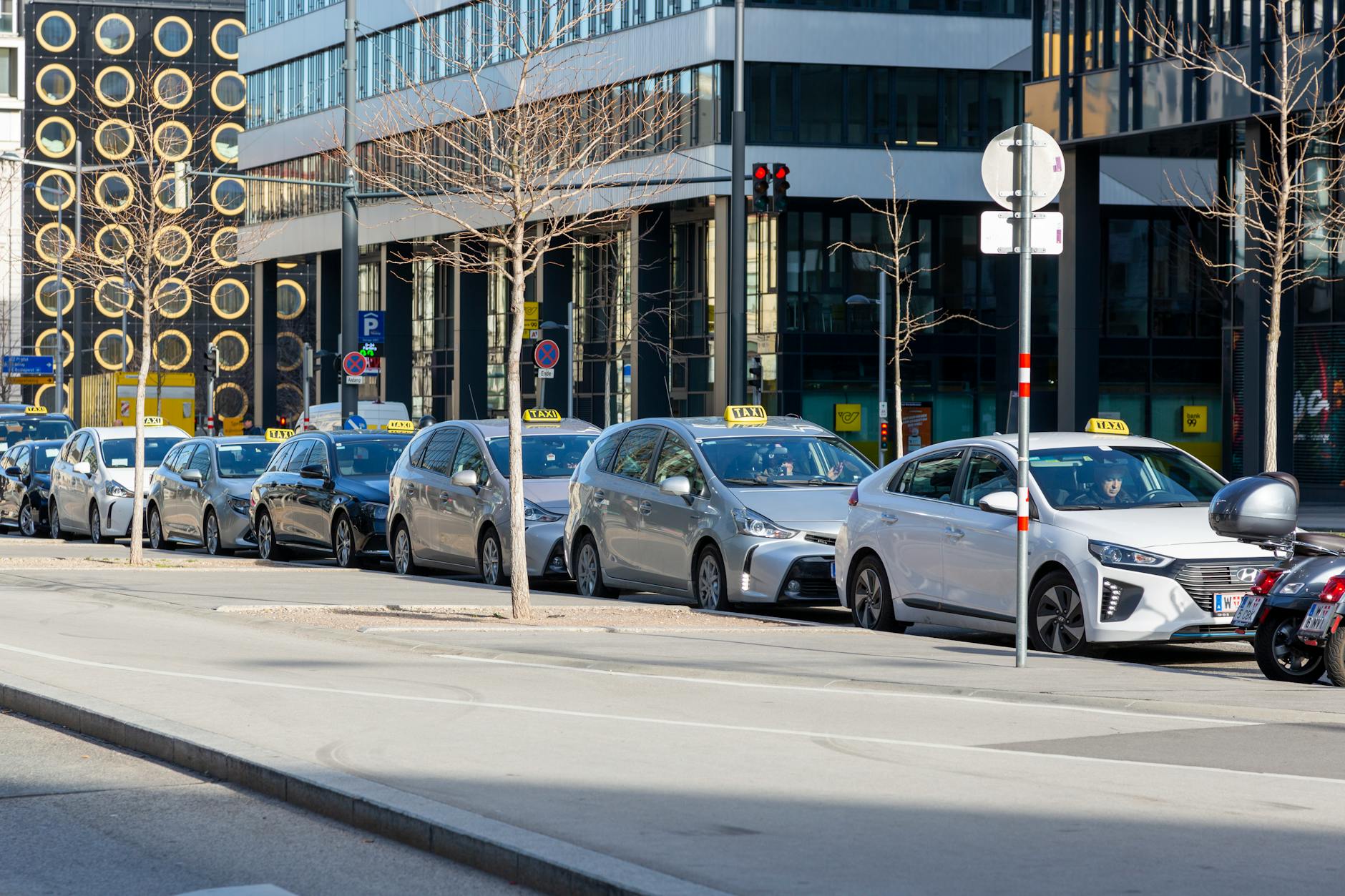
Taxis and Ride-Hailing: When You Need Door-to-Door
Vienna’s taxis are metered, regulated, and reliable. You can hail them on the street, find them at designated taxi stands (near major hotels, train stations, and tourist areas), or call ahead. The major taxi companies are:
Taxi 31300 (largest fleet), Taxi 40100, and Taxi 60160. All can be booked by phone or app. Base fare starts at approximately €3.80 during the day, with per-kilometer charges of around €1.42. A typical ride across the city center costs €8–€15. Nighttime fares (11 PM–6 AM) and Sunday/holiday rates are slightly higher.
Ride-Hailing Apps
Uber and Bolt both operate in Vienna, though they function differently than in some other cities. In Vienna, ride-hailing services use licensed taxi drivers and rental car companies, so the experience is similar to a traditional taxi but with app-based convenience and transparent pricing. Fares are generally comparable to standard taxis, sometimes slightly cheaper during non-peak periods.
Tickets and Passes: Finding the Best Value
Vienna’s ticketing system is zone-based but beautifully simple for tourists — nearly everything you’ll want to see falls within Zone 100 (the core Vienna zone), and a single ticket covers all modes of transport (U-Bahn, tram, bus) within that zone.
Ticket Types and Prices (2026)
Single Ticket: €3.20 at machines, €3.00 via the WienMobil app. Valid for one journey in one direction, including transfers, for up to 80 minutes from validation.
24-Hour Ticket: €8.00 — unlimited travel for 24 hours from first validation. The best option if you’ll make 3+ trips in a day.
48-Hour Ticket: €14.10 — same benefits over two days.
72-Hour Ticket: €17.10 — the sweet spot for most visitors staying 3 days.
Weekly Pass: €17.10 — valid Monday 00:00 to Monday 09:00 the following week. Incredible value if your visit spans a Monday-to-Monday period.
Vienna City Card: Starting at €17 for 24 hours, this combines unlimited public transport with discounts of up to 30% at over 200 attractions, museums, restaurants, and shops. Available in 24-hour, 48-hour, 72-hour, and 7-day versions. Worth it if you plan to visit multiple paid attractions.
Where to Buy Tickets
Tickets are available at ticket machines in every U-Bahn station (they accept cash and cards and offer English-language menus), Tabak-Trafik shops (tobacco kiosks — look for the red-and-white signs), the WienMobil app (most convenient — buy and validate digitally, no paper needed), and Wiener Linien information centers at major stations like Stephansplatz, Karlsplatz, and Praterstern.
Validation Rules
Paper tickets must be stamped in the blue validation machines before your first journey — you’ll find these at U-Bahn station entrances and inside trams and buses. Digital tickets purchased on the WienMobil app activate automatically when purchased or at a time you specify. Multi-day passes start counting from the moment of first validation, not from midnight — so a 24-hour ticket stamped at 2 PM is valid until 2 PM the next day.
Walking in Vienna: The Most Rewarding Transport
Don’t overlook the simplest option — walking. Vienna’s historic center (the Innere Stadt / 1st District) is remarkably compact and almost entirely pedestrianized. You can walk from the State Opera to St. Stephen’s Cathedral in 10 minutes, and from there to the Danube Canal in another 10. Major sights like the Hofburg, Albertina, MuseumsQuartier, and Naschmarkt are all within comfortable walking distance of each other.
Vienna is an exceptionally walkable city with wide sidewalks, abundant pedestrian zones (Kärntner Straße, Graben, Kohlmarkt), well-maintained crossings, and a flat terrain that makes strolling effortless. The city has been repeatedly ranked among the most livable cities in the world, and its pedestrian infrastructure reflects that commitment to quality of life.
Danube River and Canal Boats
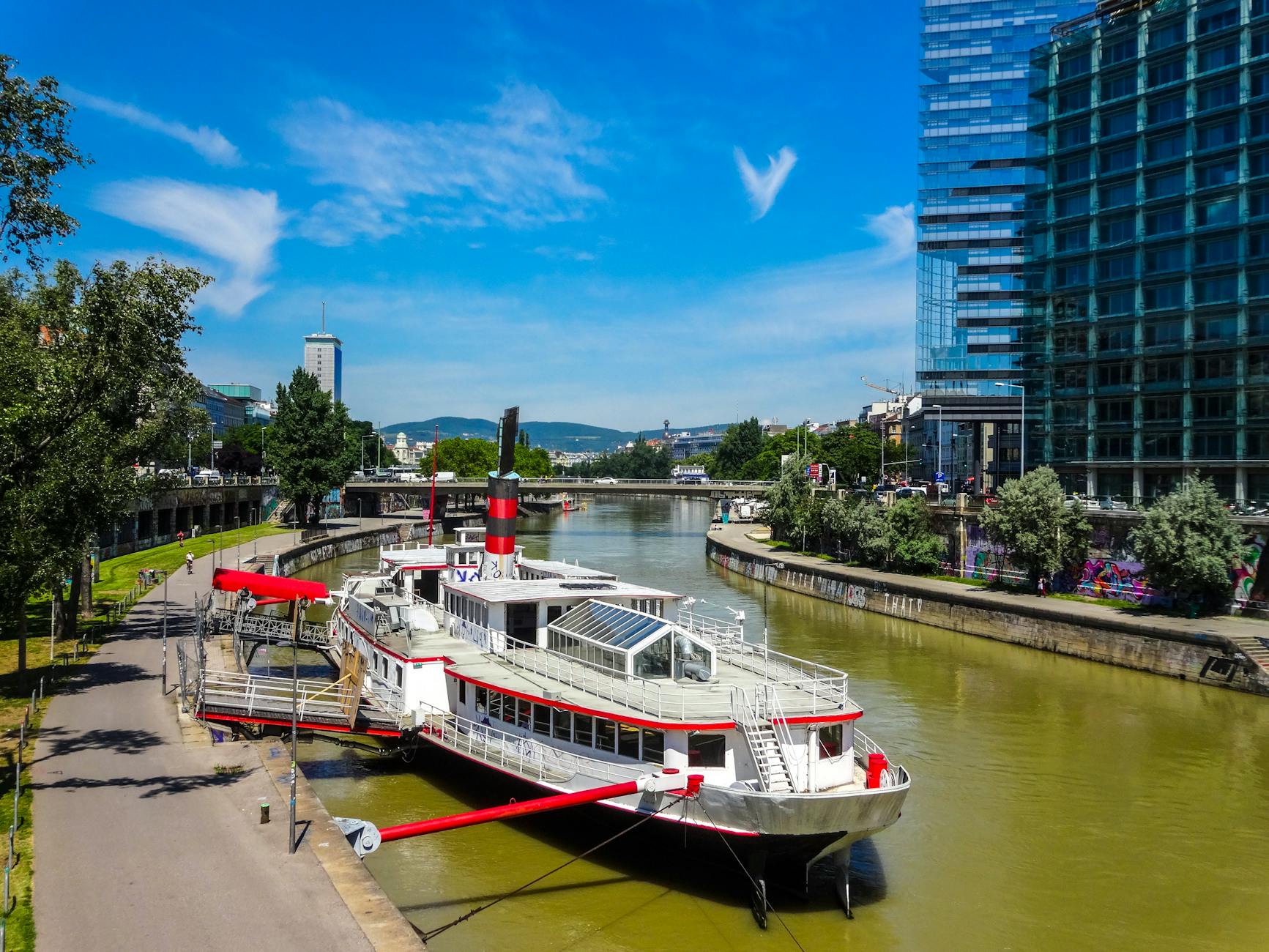
For a unique transport experience, consider the DDSG Blue Danube sightseeing boats on the Danube River and Canal. While primarily touristic, they’re a legitimate way to travel between points along the waterway — particularly enjoyable during warm months. The Danube Canal cruise passes through the heart of the city, offering views of the Urania observatory, the Hundertwasser district, and vibrant street art murals. Longer Danube River cruises connect Vienna to Bratislava (75 minutes by high-speed catamaran) and the Wachau Valley wine region (a full day trip).
Driving in Vienna: What You Need to Know
While public transport is excellent, some visitors may choose to drive — particularly those combining Vienna with an Austrian road trip. Key things to know:
Parking: The entire city inside the Gürtel ring road (districts 1–9 and 20) is a short-term parking zone (Kurzparkzone). You must display a parking voucher (Parkschein), available from Tabak-Trafik shops, and parking is limited to 2 hours maximum on weekdays (9 AM–10 PM). Many outer districts have also adopted parking zones. Underground garages in the center charge €3–€6 per hour.
Vignette: All vehicles using Austrian motorways must display a valid Autobahn vignette (highway toll sticker). A 10-day vignette costs €9.90 for cars. You can purchase a digital version online through the ASFiNAG website or app.
Our Advice: Unless you’re planning day trips to the countryside, you don’t need a car in Vienna. Public transport, cycling, and walking will cover virtually everything a tourist needs, and parking hassles and costs aren’t worth it for city-only exploration.
Accessibility and Special Needs
Vienna’s public transport is largely barrier-free. All U-Bahn stations have elevators, low-floor trams are standard on most routes, and buses kneel at stops for easier boarding. The WienMobil app and Wiener Linien website offer a barrier-free route planner that specifically avoids stairs and escalators. Guide dogs are permitted on all public transport free of charge, and wheelchair spaces are available in all modern vehicles.
Essential Apps for Getting Around
Several smartphone apps make navigating Vienna effortless. WienMobil (by Wiener Linien) is the all-in-one app for buying tickets, planning routes, and checking real-time departures. Google Maps and Apple Maps both offer excellent Vienna public transport integration, showing real-time U-Bahn, tram, and bus schedules. ÖBB (Scotty) is the app for Austrian Federal Railways — essential for train tickets and schedules if you’re planning day trips. Wien zu Fuß (Vienna on Foot) is a walking-focused app highlighting scenic pedestrian routes throughout the city.
Practical Tips for Tourists
Buy a multi-day pass immediately. If you’re staying more than one day, a 24/48/72-hour pass pays for itself quickly and eliminates the hassle of buying individual tickets.
Validate once, ride freely. Multi-day passes only need to be validated once — your first time using them. After that, just carry the ticket with you.
Download the WienMobil app before you arrive. You can buy tickets, plan routes, and check real-time schedules — all in English.
Use trams as sightseeing. Lines 1 and 2 around the Ring give you a budget city tour for the price of a single ticket.
Don’t jaywalk. Austrians take traffic rules seriously, and pedestrians wait for green signals even when no cars are coming. Follow the local custom.
Keep your ticket until you exit. Inspectors can check at any point during your journey, including on platforms after you leave the train.
Night transport is excellent. Between 24-hour weekend U-Bahn service and the Nightline bus network on weeknights, you’re never stranded after dark.
Vienna’s Transport History: From Horse-Drawn to High-Tech
Vienna’s love affair with public transport stretches back over 150 years. The city’s first horse-drawn tramway began operating in 1865, running along the Ringstraße. Electric trams replaced horse power in 1897, and by the early 20th century, Vienna boasted one of Europe’s most extensive streetcar networks. The U-Bahn didn’t arrive until 1976 — relatively late compared to London or Paris — but it was built with characteristically Viennese attention to quality and aesthetics.
The architectural legacy of Vienna’s early transit system is still visible today. Several U6 stations along the Gürtel were designed by Otto Wagner, the legendary Jugendstil architect, in the late 1890s for the original Stadtbahn (city railway). Stations like Josefstädter Straße and Burggasse-Stadthalle feature Wagner’s distinctive green copper roofing, ornamental ironwork, and elegant entrance pavilions — they’re functioning transit stations that double as architectural landmarks.
Traveling with Children
Vienna’s public transport is exceptionally family-friendly. Children under 6 ride free on all Wiener Linien services without any ticket required. Children under 15 ride free on Sundays, public holidays, and during Vienna school holidays (including summer holidays from early July through early September). At all other times, children aged 6–14 travel at half price.
Strollers and buggies are welcome on all services, with designated spaces in trams and buses. Most U-Bahn stations have elevators, and the WienMobil app’s route planner includes a barrier-free option that ensures your route avoids stairs — essential when you’re navigating with a sleeping toddler in a stroller. The Wiener Linien customer service centers at Stephansplatz and Erdberg can provide printed maps showing elevator-accessible routes.
Day Trip Transport: Venturing Beyond Vienna
Vienna’s central location makes it an excellent base for day trips, and the train connections are superb. The ÖBB (Austrian Federal Railways) operates fast, comfortable trains to destinations across Austria and neighboring countries:
Wachau Valley: Take the S40 from Franz-Josefs-Bahnhof to Krems (about 1 hour) for wine tasting, apricot orchards, and Danube River scenery. From Krems, boats cruise downstream through the valley.
Bratislava: Just over an hour by train from Wien Hauptbahnhof — or take the Twin City Liner catamaran down the Danube for a scenic 75-minute journey.
Salzburg: ÖBB Railjet trains reach Salzburg in about 2.5 hours, making it a comfortable day trip to Mozart’s birthplace and The Sound of Music country.
Baden bei Wien: The Badner Bahn (tram line 360/WLB) runs from the Vienna Opera directly to the spa town of Baden — a charming 60-minute journey on a vintage-style interurban tram that’s covered by your regular Vienna transport ticket for the first few zones.
Seasonal Transport Considerations
Winter (December–February): Vienna’s public transport runs reliably even in snow and cold. The U-Bahn is underground and unaffected by weather. Trams may experience minor delays during heavy snowfall, but service is rarely disrupted. Extra services run during the Christmas market season (mid-November through late December) to handle increased passenger numbers.
Summer (June–August): All newer trams, U-Bahn trains, and buses are air-conditioned — a genuine relief during Vienna’s increasingly warm summers, when temperatures can exceed 35°C. The Danube Island area becomes a major destination, easily reached via the U1 to Donauinsel station.
Events and Holidays: During major events like the Vienna Marathon (April), New Year’s Eve celebrations, and the Life Ball, Wiener Linien typically extends service hours and adds extra trains. Check the Wiener Linien website or app for special event schedules.
Money-Saving Transport Tips
Getting around Vienna doesn’t have to be expensive. Here are the insider ways to save:
The Weekly Pass trick: At €17.10, the weekly pass costs the same as a 72-hour ticket but covers Monday through the following Monday morning. If your trip spans a Monday, it’s unbeatable value.
Buy digital: Single tickets purchased via the WienMobil app cost €3.00 versus €3.20 at machines — small savings that add up.
Skip the CAT: The S7 train from the airport costs a fraction of the City Airport Train fare and only takes 10 minutes longer.
Walk the center: The entire Inner City is walkable. Save your transit trips for reaching places outside the 1st district.
Free bike sharing starts: The first 30 minutes of every WienMobil Rad ride are free. For short hops between attractions, cycling costs nothing.
Vienna Transport Etiquette: Unwritten Rules
Austrians are polite but direct, and there are unwritten rules on public transport that visitors should know. Keep right on escalators — the left side is for walking. This rule is strictly observed and blocking the left side will earn you irritated looks. Remove your backpack on crowded trains and trams, holding it in front of you or placing it between your feet. Eating is technically allowed on public transport but frowned upon for anything with a strong smell — stick to a quick snack if needed.
Quiet is valued. While Vienna’s public transport isn’t silent, loud phone conversations, music without headphones, and boisterous group conversations are considered rude. You’ll notice that most Viennese ride quietly, reading or on their phones. Offer your seat to elderly passengers, pregnant women, and people with disabilities — this is both expected and deeply appreciated.
When exiting, the phrase “Darf ich bitte?” (May I, please?) will get people moving out of your way politely. Saying “Entschuldigung” (Excuse me) also works well. A small effort at German goes a long way.
E-Scooters and Micro-Mobility
Electric scooters from companies like Lime, Tier, and Bird are widely available throughout Vienna. They can be unlocked via each company’s app, and they’re useful for covering short distances quickly — particularly along the Danube Canal or between attractions in adjacent districts. Rates are typically around €1 to unlock plus €0.20–€0.25 per minute.
Vienna has implemented strict regulations for e-scooters: speed is limited to 20 km/h, riding on sidewalks is prohibited (use bike lanes or roads), and parking is only allowed in designated areas. Two riders on one scooter is illegal and can result in a fine. Helmets are recommended but not legally required for adults.
Navigating Vienna as a First-Time Visitor: A Sample Day
To illustrate how all these transport options fit together, here’s how a typical tourist day might look:
Morning: Take the U4 from your hotel area to Schönbrunn (Schönbrunn station). Spend the morning exploring the palace and gardens. The U4 runs frequently and the journey from the center takes about 15 minutes.
Midday: U4 back to Karlsplatz, then walk through the Innere Stadt to St. Stephen’s Cathedral for lunch. The walk takes about 15 minutes and passes through Vienna’s elegant shopping streets.
Afternoon: From Stephansplatz, take the U1 two stops to Praterstern for the Prater park and Riesenrad (Giant Ferris Wheel). Alternatively, take Tram 1 or 2 around the Ringstraße for a scenic overview of the city’s grand public buildings.
Evening: Return to the center and walk to the Naschmarkt for dinner, then stroll along the Danube Canal for a drink at one of the waterfront bars. If you’re out past midnight on a weeknight, the Nightline bus from Schwedenplatz will get you home reliably.
Total transport cost for this day: one 24-hour ticket at €8.00 — covering unlimited U-Bahn, tram, and bus rides. That’s less than the cost of a single museum coffee.
Frequently Asked Questions
Do I need to speak German to use public transport? No. All signage includes universal symbols, the WienMobil app is available in English, and ticket machines offer English menus. Station announcements are in German, but electronic displays show stop names clearly.
Is Vienna safe to use public transport at night? Yes, very. Vienna consistently ranks as one of the safest cities in the world. The U-Bahn and Nightline buses are well-lit and monitored. Exercise normal precautions as you would in any major city.
Can I use contactless payment on trams and buses? Not directly — you can’t tap your credit card to ride. Buy tickets in advance via the app, at machines, or at Trafik shops.
Is the Vienna City Card worth it? If you plan to visit 3+ paid attractions during your stay, yes. The transport component alone covers a 24/48/72-hour pass, and the discount card adds genuine savings at major museums and attractions.
What about pets on public transport? Small dogs in carriers ride free. Larger dogs need a half-price ticket and must wear a muzzle. Guide dogs are exempt from both the muzzle and ticket requirements.
Leave a Reply